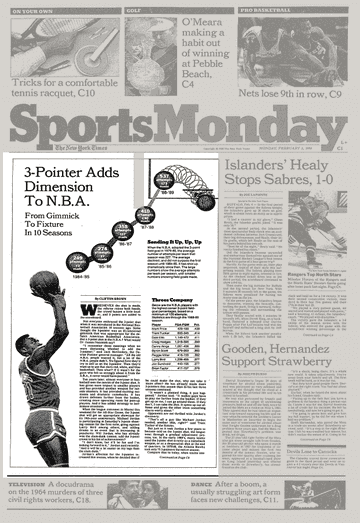

The modern National Basketball Association is obsessed with the three-point shot. Teams launch 35 to 45 threes per game like it's mandatory. Analytics departments preach efficiency. Coaches preach spacing. Players grow up believing the three-pointer is the highest form of basketball offense.
But somewhere along the way, the league confused a weapon with an identity.
The three-pointer is exciting when it changes the game. But when every possession becomes another rushed pull-up, the emotional weight disappears. The shot loses its drama because it becomes routine.
The NBA didn't just add the three-point shot to basketball. It rebuilt basketball around it.
That's where the Rhythm Trap begins.
Rhythm vs. Read
Basketball is supposed to be a game of reads. Read the defense. Attack the mismatch. Take what the defense gives you.
But rhythm changes psychology.
Once shooters see a couple go in, the brain starts chasing feeling instead of reading the floor. Players become locked into shooting rhythm. The offense narrows. Even elite players can fall into it - not because they forgot their skills, but because rhythm can temporarily dominate decision-making.
No player represents this better than Stephen Curry.
Curry is the greatest shooter ever, but people forget what made him terrifying at Davidson. He was not just bombing threes. He was a complete shot creator with elite handle, finishing ability, and off-the-dribble creativity. He manipulated defenses everywhere on the floor.
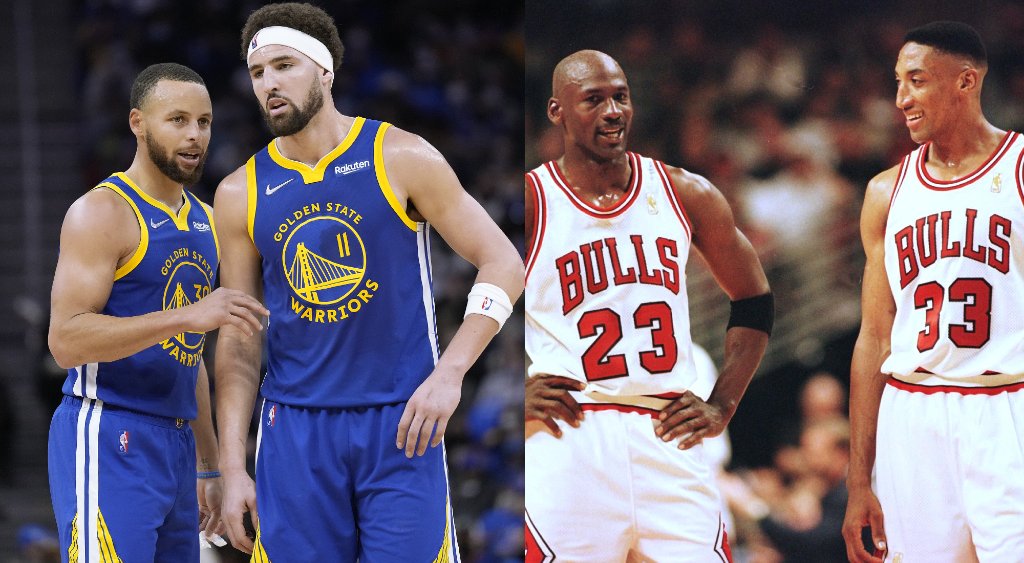
The difference is Curry and Klay Thompson were outliers. The Golden State Warriors built a dynasty around perhaps the two greatest shooters ever assembled. That blueprint produced four championships and six Finals appearances because the personnel justified the philosophy.
The problem is the rest of the league copied the volume without copying the talent.
The Joel Embiid Problem
Joel Embiid exposes the flaw in modern offensive thinking better than almost anyone.
Embiid can shoot the three better than most centers. That's true. But the question is not: Can he shoot threes?
The real question is: What happens to the defense when he doesn't?
When Embiid stands at the three-point line, the possession becomes relatively simple. The defense stays organized. The defender stays home. It becomes mostly one-on-one basketball.
But when Embiid enters the post, everything changes. The defense collapses. Double teams come immediately. Weakside defenders rotate. Shooters become open. Passing lanes appear. Defenders risk foul trouble. The game becomes organized chaos for the defense.
02 Free throws at will
03 Open corner threes for teammates
04 Defensive fatigue and foul trouble
05 Rotation breakdowns
That's what analytics often misses. Basketball is not only about shot value. It is also about pressure value. Sometimes a post touch from Embiid creates a bigger offensive advantage than the three itself.
Michael Jordan Saw This Coming
Michael Jordan once explained that he intentionally did not over-focus on the three-point shot because he believed it could take away from other parts of his game.
That statement matters more today than ever.
Jordan understood that over-investing in one skill can compress the rest of a player's offensive arsenal. He chose to master footwork, midrange scoring, post play, body control, and finishing through contact instead of becoming dependent on one scoring method.
The modern NBA often moves in the opposite direction. Young players now train for efficiency before mastery. Big men drift outside. Guards skip midrange development. Role players become stationary corner shooters.
The game becomes mathematically cleaner but stylistically narrower.
The Real Danger
The danger is not the three-point shot itself.
The danger is when rhythm overrides reads. That is the Rhythm Trap.
The best offenses in basketball history were balanced. They could punish defenses in multiple ways. They forced opponents into impossible decisions. The three-pointer should remain a devastating weapon - but when it becomes the identity, teams risk reducing the very pressure that makes great offense unstoppable.
Because the best players do not simply take efficient shots. They create fear. And fear cannot be calculated by expected value alone.