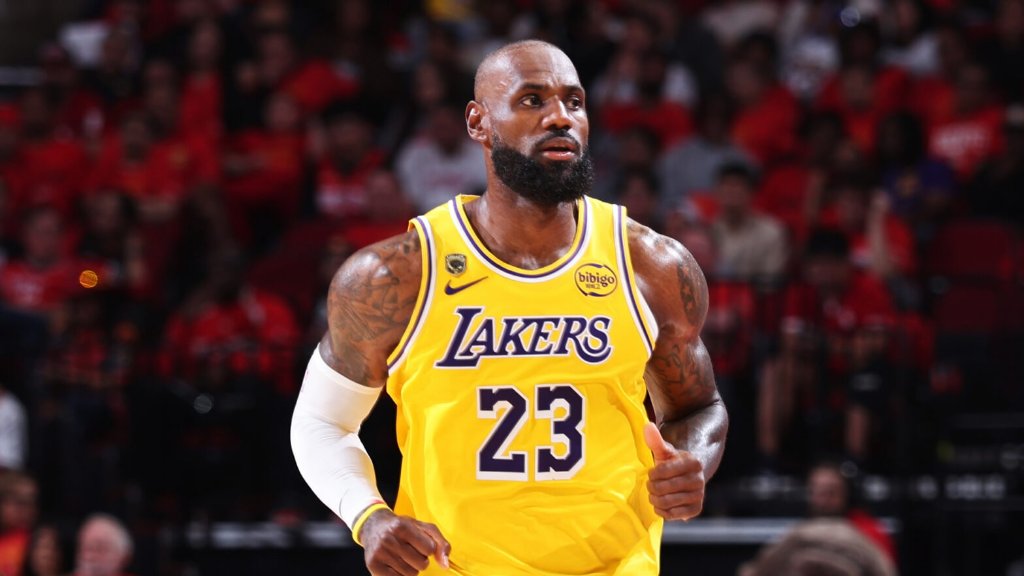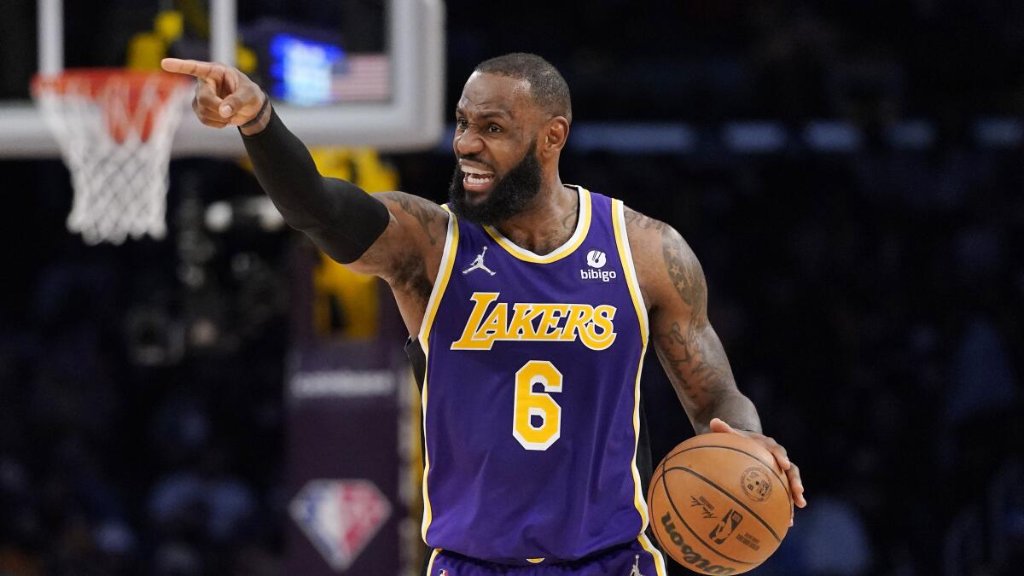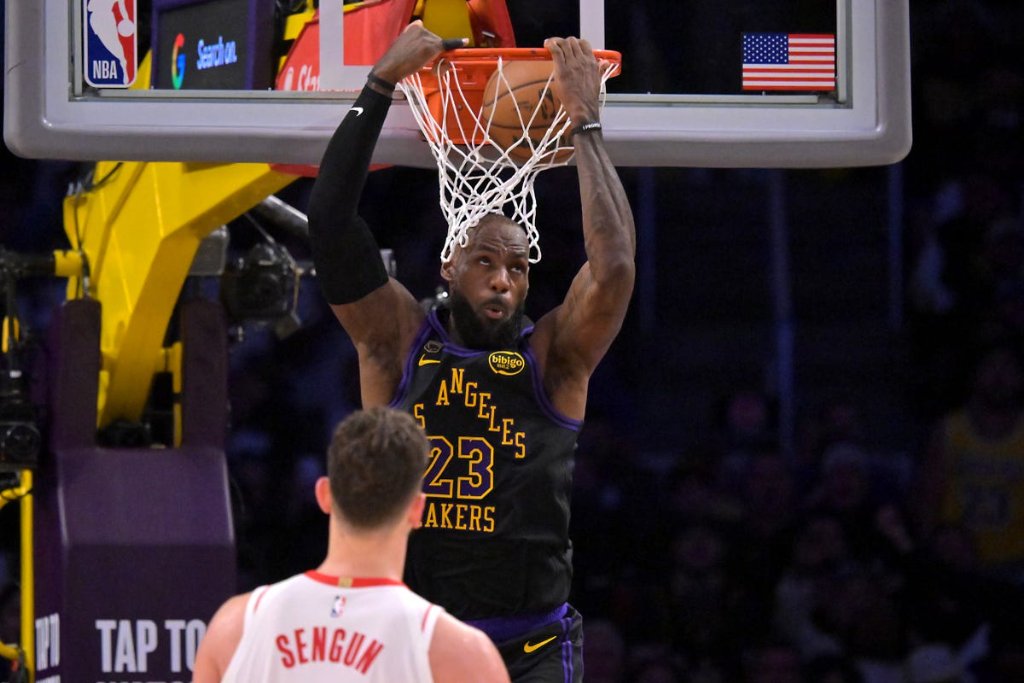

For more than a decade, the NBA's historical discourse has been trapped inside a narrowing tunnel. What once was a layered conversation about eras, styles, systems, and innovation has been reduced to a single binary:
Michael Jordan versus LeBron James.
That framing has not clarified basketball history. It has distorted it.
When One Debate Eats the Entire Sport
The modern GOAT argument dominates everything. Other all-time greats are no longer discussed on their own terms. They are used as rhetorical tools.
- Kareem Abdul-Jabbar becomes leveraged instead of legacy.
- Magic Johnson becomes a footnote.
- Tim Duncan becomes a trivia answer.
Instead of overlapping eras, basketball history becomes binary. Legends are reduced to secondary characters whose primary function is to prop up or tear down one side of a modern argument. That kind of historical flattening does not happen at the same scale in the NFL or MLB, where eras coexist and pioneers are still treated as definitional rather than disposable.
Championships Are Team Achievements, Not Solo Acts
A championship is not a single possession, a single shot, or a single name. Michael Jordan did not win six titles alone. The Chicago Bulls won six championships. Jordan was the driving force, the leader, and the best player, but not a solo operation.
Basketball fans routinely collapse team achievements into individual trophies in a way other sports rarely do. Wins are personalized. Losses are contextualized. That imbalance fuels fan warfare and corrupts evaluation. Basketball is the most collaborative of the superstar sports, yet it is discussed as if it were a one-man event.
The Myth of the "Bad Organization"
One of the most incoherent arguments in modern NBA discourse is the bad CEO narrative surrounding LeBron's early Cleveland years. Those teams were not dysfunctional failures. They won consistently.
Cleveland posted: 66-16 in 2009, 62-20 in 2010, and multiple 50+ win seasons. The inability to land stars like Amar'e Stoudemire or Chris Bosh was not proof of incompetence. It was market reality. Yet retroactively, those same winning environments are labeled toxic to justify results people do not like.
You cannot go to ten NBA Finals and simultaneously argue total organizational failure. Both cannot be true.
Coaching Context: Reality Versus Narrative
David Blatt: Underrated and Misremembered
David Blatt finished his NBA tenure at 83-38. His Cavaliers reached the 2015 Finals, lost Kyrie Irving and Kevin Love, and still went up two games to one on a 67-win Warriors team. Golden State was forced to change its starting lineup mid-series. That is not incompetence. That is pressure.
The 2016 Cavaliers were 30-11, a 60+ win pace, before Blatt's firing. Cleveland did not run out of ideas in 2015. They ran out of bodies.
Tyronn Lue: Contextual Success
Tyronn Lue made real adjustments in the 2016 Finals. That matters. So does context. The momentum shift created by Draymond Green's suspension was real. After 2016, Lue's Finals record fell to 1-8, and his Clippers tenure, with elite talent, has not matched expectations. A strong tactician. Not a long-term system builder.
Erik Spoelstra: The Counterexample
Erik Spoelstra proves the larger point. Untested before LeBron, Spoelstra became elite through continuity. He reached six Finals and won championships with and without LeBron. Great coaches are constructed, not delivered pre-packaged.
The "What If He Had Phil or Pop?" Fallacy
Legends do not arrive fully formed. Phil Jackson was not Phil Jackson before Chicago. Gregg Popovich was not Pop before Duncan. Pat Riley was not Riley before friction and time.
The Bulls do not get Phil Jackson if they chase Riley or Chuck Daly instead. LeBron had versions of elite coaching - Blatt as a system architect, Spoelstra as a coach who evolved into excellence. The issue was not talent. It was continuity.
Leadership Style as a Legitimate Criticism
LeBron's weakness was never skill-based. It was relational. Maintaining long-term coaching authority proved difficult. Friction led to resets. Those resets are often misdiagnosed as bad training rather than leadership tension.
Contrast that with other greats: Jordan clashed with Phil, but stayed. Tim Duncan empowered Popovich. Stephen Curry empowered Steve Kerr. At GOAT margins, leadership tolerance matters.
The NBA's Unique Legacy Problem
NBA debates do not just argue. They erase. Pioneers are mocked. Eras are dismissed. Respect is treated as a weakness. NFL and MLB debates do not degrade their own history this way. The NBA's media ecosystem incentivizes polarization, not evaluation. Emotion replaces structure. Myth replaces the record.
The Right Standard
You can believe LeBron James is an all-time great without lying. You can believe Michael Jordan is the GOAT without erasing others. Preference is not evaluation. Championships are team results driven by leaders. Context matters. Results matter too.
Closing Principle
GOAT arguments should expand the story, not flatten it. Greatness does not need mythology. It survives in honesty.