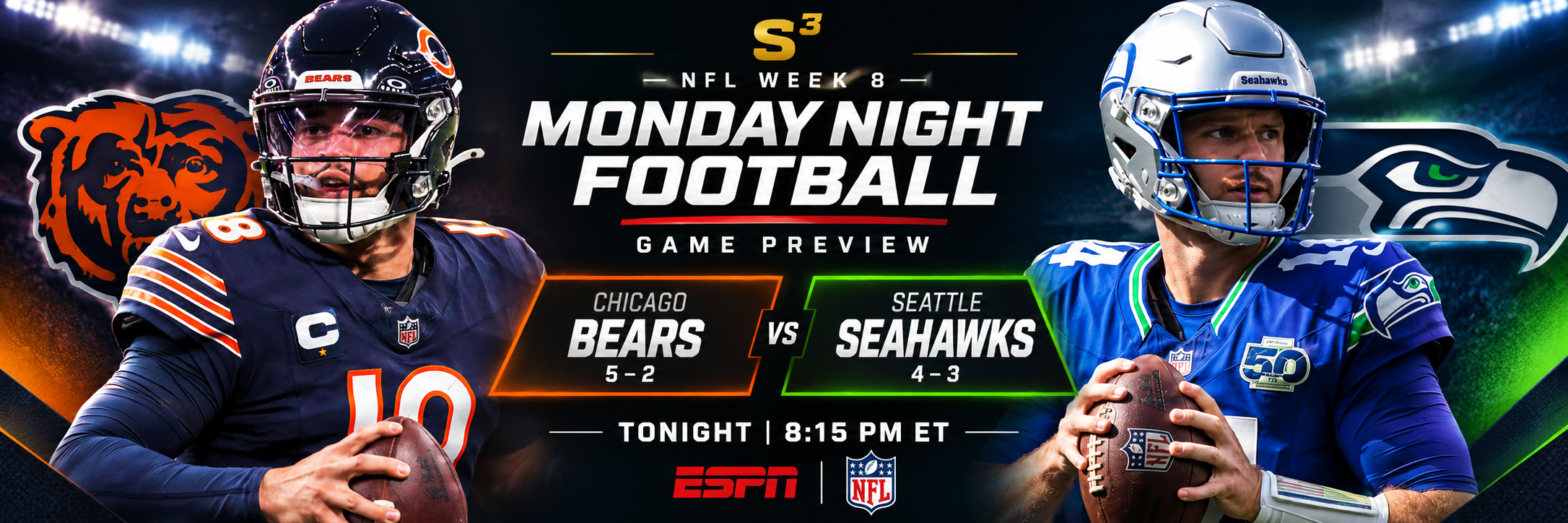
The Chicago Bears are beginning to look like legitimate Super Bowl favorites.
Chicago improved to 6–2 Monday night with a convincing 34–17 victory over the Seattle Seahawks at Lumen Field, delivering one of its strongest statements of the season.
The Bears controlled possession, converted critical third downs and dominated the red zone. But one of the biggest stories was the sensational Chicago debut of defensive tackle Jeffery Simmons.
Jeffery Simmons Makes an Immediate Impact
There were questions about how quickly Simmons could adjust to Chicago's defense after joining the Bears.
He answered them Monday night.
Simmons finished with six tackles, one sack, two tackles for loss, one quarterback hit and one pass defended.
His presence helped Chicago disrupt Seattle's offensive rhythm and put additional pressure on quarterback Sam Darnold.
Simmons wasn't the only defender making plays. Devin Bush recorded six tackles and a sack, while Montez Sweat added a sack and three quarterback hits.
Chicago's defense finished with three sacks and held Seattle to just 17 points.
The Bears already had an intriguing roster. Simmons gives their defensive front another difference-maker.
Caleb Williams Delivers a Controlled Performance
Caleb Williams didn't need to put on a spectacular individual performance. He needed to command the offense, protect the football and capitalize on opportunities.
He did exactly that.
Williams completed 24 of 34 passes for 247 yards, one touchdown and zero interceptions, finishing with a 101.0 passer rating.
Chicago converted seven of 15 third-down opportunities and generated 363 total yards.
Rome Odunze led the receiving corps with 87 yards on four receptions, while Colston Loveland caught seven passes for 65 yards.
Luther Burden III added seven receptions for 56 yards and a touchdown.
Williams distributed the football effectively without forcing unnecessary throws.
D'Andre Swift Finishes What Chicago Starts
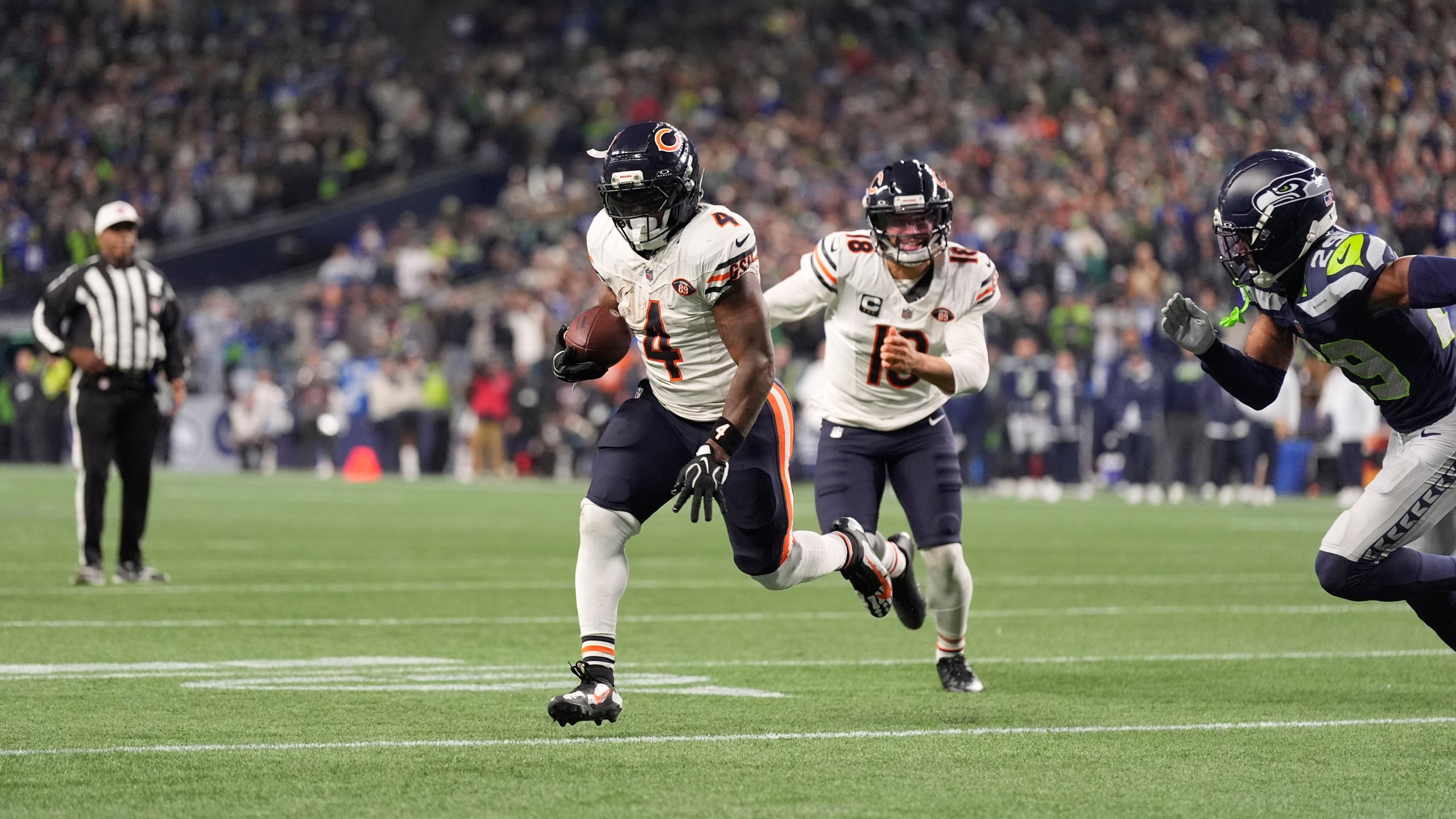
D'Andre Swift wasn't particularly efficient on the ground, but he was extremely effective near the goal line.
Swift rushed for 69 yards on 27 carries and scored three touchdowns.
Chicago finished a perfect four-for-four in the red zone, while Seattle converted only one of four opportunities.
The Bears didn't need overwhelming rushing production. They needed their running game to finish possessions, and Swift delivered.
Seattle's Running Game Leaves Darnold Exposed
Seattle's offensive struggles continue to raise questions about its championship potential.
The Seahawks finished with 81 rushing yards, but their two primary running backs combined for just 52 yards on 16 carries.
Jadarian Price rushed for 29 yards, while Zach Charbonnet managed 23.
Without a dependable rushing attack, Seattle repeatedly placed Sam Darnold in obvious passing situations.
Darnold completed 17 of 34 passes for 188 yards, two touchdowns and one interception.
Jaxon Smith-Njigba was Seattle's most productive offensive weapon, catching six passes for 118 yards and a touchdown.
But the Seahawks couldn't consistently sustain drives.
Seattle converted just one of 11 third-down opportunities and struggled to finish scoring possessions.
The decisive mistake came in the fourth quarter when Darnold threw an interception to James Lynch, giving Chicago possession at Seattle's 6-yard line.
The Bears converted the turnover into another Swift touchdown.
Seattle needs a running game not simply to help Darnold win games, but to protect the team from the mistakes that emerge when he's asked to do too much.
Chicago Looks Like a Championship Contender
Chicago's victory wasn't built around one spectacular performance.
It was built around complementary football.
The offense protected the football, the defense created pressure, and the Bears converted their opportunities into touchdowns.
The addition of Jeffery Simmons makes an already dangerous Chicago defense even more formidable.
At 6–2, the Bears deserve serious consideration among the NFC's leading Super Bowl contenders.
Seattle falls to 4–4, remaining at .500 despite another disappointing performance. The Seahawks still have time to correct their offensive problems, but their inability to establish a dependable running game remains a major concern.
The Bears aren't just winning games. They're building a championship argument.