
NFL officials make decisions at full speed while players, coaches, and entire stadiums question their judgment. It is a demanding job. But integrity has to trump the temptation to get involved in a back-and-forth.
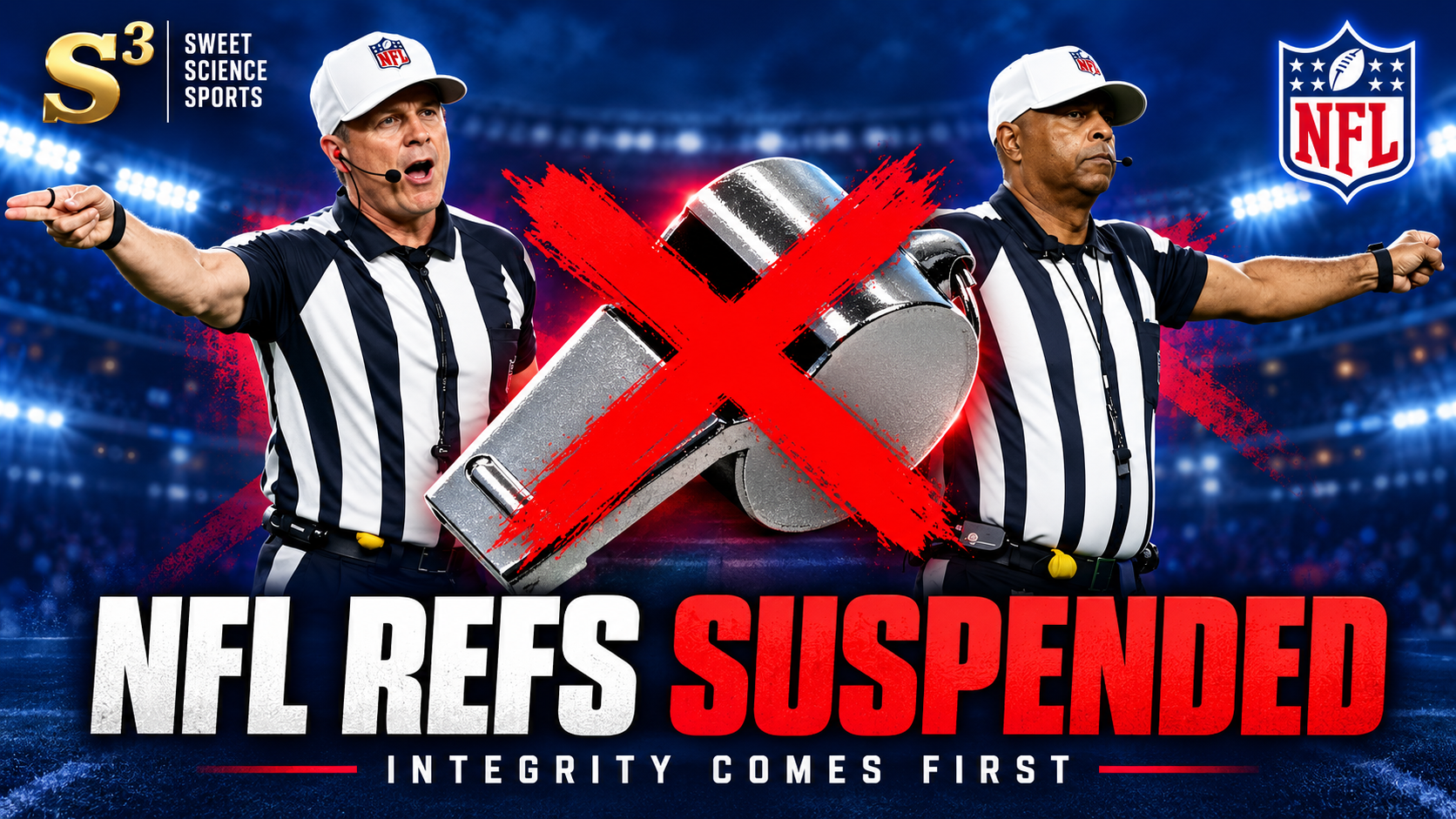
The NFL suspended line judge Jeff Seeman for two games and referee Adrian Hill for one on October 5, citing “unprofessional conduct toward a player.” Seeman appeared to curse at Arizona tight end Trey McBride after a disputed no-call during Cardinals–Giants. Hill appeared to yell at Minnesota linebacker Eric Wilson after a collision knocked Hill down and Wilson tried to help him to his feet.
From the S³ perspective, the league was right to address the behavior. An official has to manage a confrontation while preserving the credibility he needs to judge the next play.
The problem extends beyond the language. Once a referee directs personal hostility toward a player, his impartiality comes under suspicion. If that player gets flagged later, or another borderline call goes against him, people may wonder whether the disagreement influenced the decision.
That suspicion can exist even when the call is correct.
An official might move on from an argument immediately. The player, coaches, and audience may still remember it. Every subsequent decision involving that player can be viewed through the earlier exchange. The official has created an avoidable reason to question his judgment.
Sports betting adds another layer of scrutiny. The scale is substantial: earlier this year, the American Gaming Association estimated that Americans would legally wager $1.76 billion on Super Bowl LX.
A penalty or no-call can affect a drive, the final score, a point spread, or an individual player’s betting props. With money riding on those outcomes, a hostile exchange can give fans and bettors another reason to doubt a disputed decision.
The conduct described in these reports does not establish deliberate manipulation or gambling involvement. The concern here is the appearance of personal bias. The NFL needs people to believe that its games are decided through competition and impartial enforcement of the rules.
There is precedent for disciplining an official over comments toward a player. In 2013, umpire Roy Ellison received a one-game suspension for profane and derogatory remarks toward Washington tackle Trent Williams.
Players and coaches have responsibilities, too. Disagreeing with a ruling does not give anyone unlimited permission to abuse an official. A referee can explain the decision, set a boundary, and address misconduct through the rules. He has ways to maintain authority without trading personal insults.
That restraint matters because his next decision could change the game. He needs a clear head, and everyone watching needs confidence that the earlier disagreement will have no bearing on his judgment.
The suspensions reinforce a necessary standard. Officials are accountable for how they use their authority and how they conduct themselves toward the people they officiate.
It is a tough job, but the responsibility comes with the whistle. Integrity has to come first, even when the temptation to answer back is strong.