
October 31, 2026 | Riyadh, Saudi Arabi
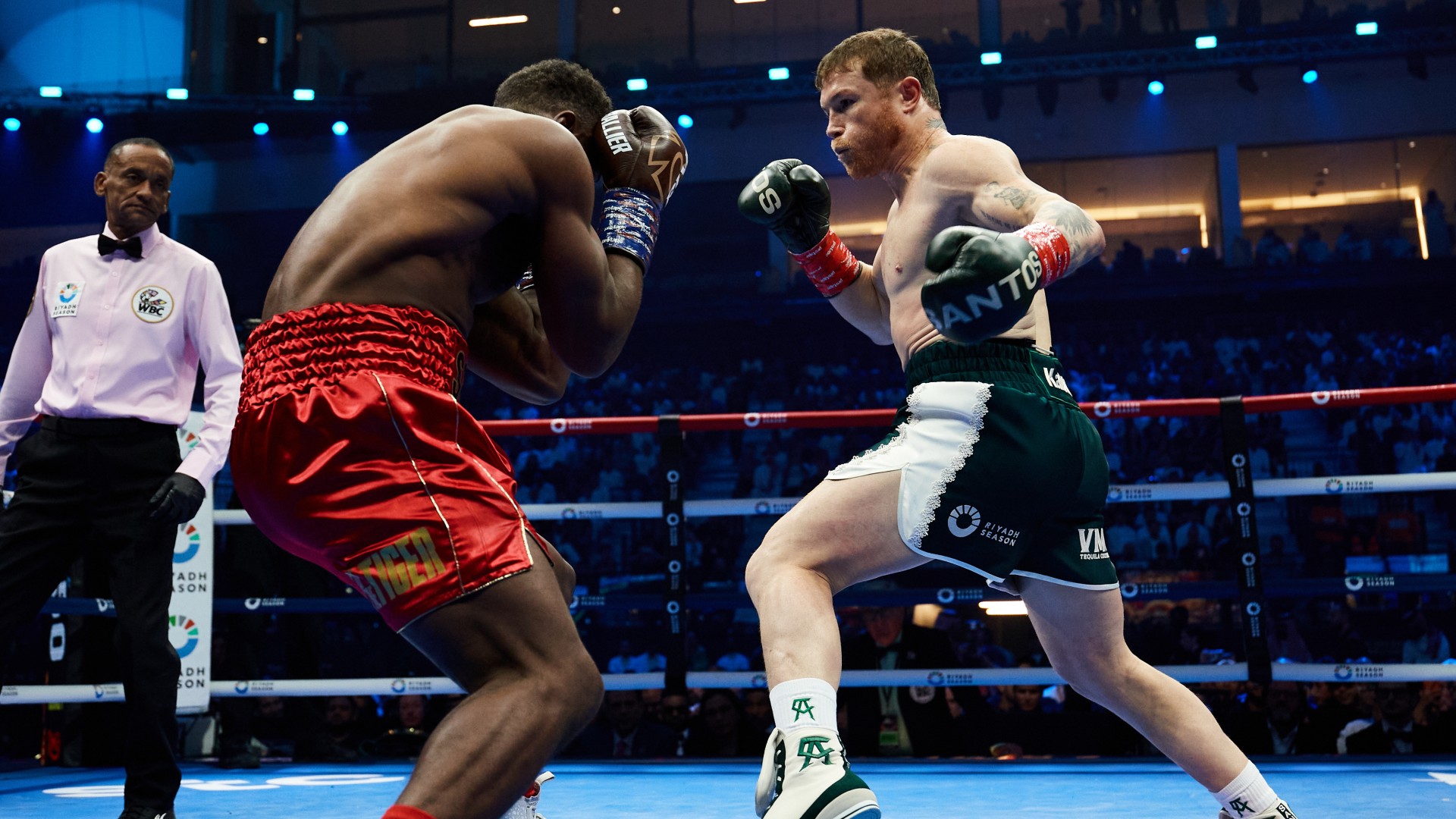
Canelo Álvarez defeated Christian Mbilli by unanimous decision Saturday night, reclaiming the WBC super middleweight championship with a performance built on accuracy, experience and superior ring intelligence.
The judges scored the 12-round contest 115–112, 116–111 and 117–110 in favor of Álvarez. Sweet Science Sports scored the fight 116–110, including a two-point deduction against Mbilli.
It was another example of Canelo's ability to win without overwhelming an opponent physically. The Mexican veteran controlled the pace, selected his punches carefully and made the adjustments necessary to neutralize a younger, physically aggressive champion.
Mbilli Started Strong, but Canelo Adjusted
Mbilli entered the contest with the physical tools to trouble Álvarez. His pressure, punching volume and strength were expected to test the veteran's conditioning.
Early in the fight, Mbilli showed discipline. Rather than recklessly charging forward, he worked behind straight punches and maintained a compact guard to avoid Canelo's counters.
That approach produced competitive opening rounds.
S³ awarded Mbilli three of the first five rounds, as his activity and aggression helped him establish an early advantage.
But Canelo began solving the problem.
Álvarez improved his jab, found opportunities for uppercuts and repeatedly countered Mbilli as the champion attempted to close the distance.
By the sixth round, the fight was beginning to shift.
Canelo won four consecutive rounds on the S³ scorecard from the sixth through the ninth, establishing control through cleaner punching and better positioning.
Mbilli's Inability to Adjust Proved Costly
The defining issue wasn't simply Canelo's technical superiority. It was Mbilli's inability to respond once Álvarez changed his approach.
Mbilli frequently started combinations to the body but backed away instead of continuing his attack. Canelo's counterpunching discouraged him from staying inside, where his strength and physicality could have made a difference.
Even when Canelo appeared fatigued during the seventh round, Mbilli failed to capitalize.
The champion increased his pace in the tenth and won the round on the S³ scorecard, but the adjustment came too late and wasn't sustained.
Canelo responded by taking a closely contested eleventh round with cleaner, more accurate punches.
Mbilli had opportunities to turn the contest into a physical fight. Instead, he repeatedly allowed Canelo to reset, control the distance and fight at a comfortable pace.
Canelo adjusted to Mbilli. Mbilli never consistently adjusted to Canelo.
That was the difference.
Accuracy Over Activity
Punch volume alone doesn't win boxing matches.
Mbilli was the busier fighter, but Canelo demonstrated why accuracy and effective punching remain essential.
Álvarez didn't need to match Mbilli punch for punch. He waited for openings, landed clean counters and forced his opponent to reconsider his attacks.
His defensive awareness and ability to dictate exchanges allowed him to conserve energy while continuing to win rounds.
The performance wasn't built around spectacular knockdowns or prolonged combinations. It was a calculated display of ring generalship.
Canelo understood what he needed to do and executed his strategy.
S³ Scorecard
| Round | Álvarez | Mbilli |
|---|---|---|
| 1 | 10 | 9 |
| 2 | 9 | 10 |
| 3 | 9 | 10 |
| 4 | 10 | 9 |
| 5 | 9 | 10 |
| 6 | 10 | 9 |
| 7 | 10 | 9 |
| 8 | 10 | 9 |
| 9 | 10 | 9 |
| 10 | 9 | 10 |
| 11 | 10 | 9 |
| 12 | 10 | 9 |
| Subtotal | 116 | 112 |
| Deductions | 0 | −2 |
| Final | 116 | 110 |
Official result: Canelo Álvarez wins by unanimous decision, 115–112, 116–111 and 117–110.
“This Feels Like My First Title”
Following the victory, Canelo became emotional while discussing the significance of reclaiming a world championship.
“This feels like my first title,” Álvarez said.
After 21 years as a professional and 16 years since winning his first world championship, Canelo described the moment as something almost impossible to explain.
He thanked longtime trainers Eddie Reynoso and Chepo Reynoso, crediting them for helping shape his career.
He also expressed gratitude to his family, including his wife and children, who were unable to attend.
Canelo even shared a lighthearted message from his wife, who had jokingly told him not to return home without the championship.
For a fighter who has spent more than two decades competing at the highest level, the emotion revealed just how much winning still means.
How Much Longer Can Canelo Continue?
At this stage of his career, Canelo isn't the same high-output fighter he once was.
His approach is increasingly built around timing, positioning, accuracy and experience.
Against Mbilli, those qualities were more than enough.
But the performance also raised an important question.
Was Canelo exceptionally sharp, or did Mbilli's inability to adjust make the veteran's job easier?
The answer is likely a combination of both.
Canelo deserves credit for identifying Mbilli's weaknesses and exploiting them. At the same time, Mbilli failed to impose the sustained physical pressure that might have tested the veteran's endurance.
A younger fighter capable of maintaining pressure, absorbing counters and making tactical adjustments could present a different challenge.
For now, Canelo has another world championship and another significant victory.
S³ Final Verdict:** Canelo Álvarez didn't defeat Christian Mbilli by overwhelming him with power or activity. He won by controlling the fight, making the better adjustments and consistently landing the more effective punches.
After 21 years as a professional, the Mexican star demonstrated that experience and ring intelligence remain two of boxing's most valuable weapons.
Sweet Science Sports (S³) | Where Intelligence Meets Impact