
October 22, 2026 | S³ NBA Game Center
PHILADELPHIA — For nearly two quarters, Philadelphia's highly anticipated home opener looked like an embarrassment in the making. The Cleveland Cavaliers were dominating, the 76ers couldn't establish an offensive rhythm, and their star-studded starting lineup looked completely disconnected.
Then Philadelphia reminded everyone why this team entered the season with championship expectations.
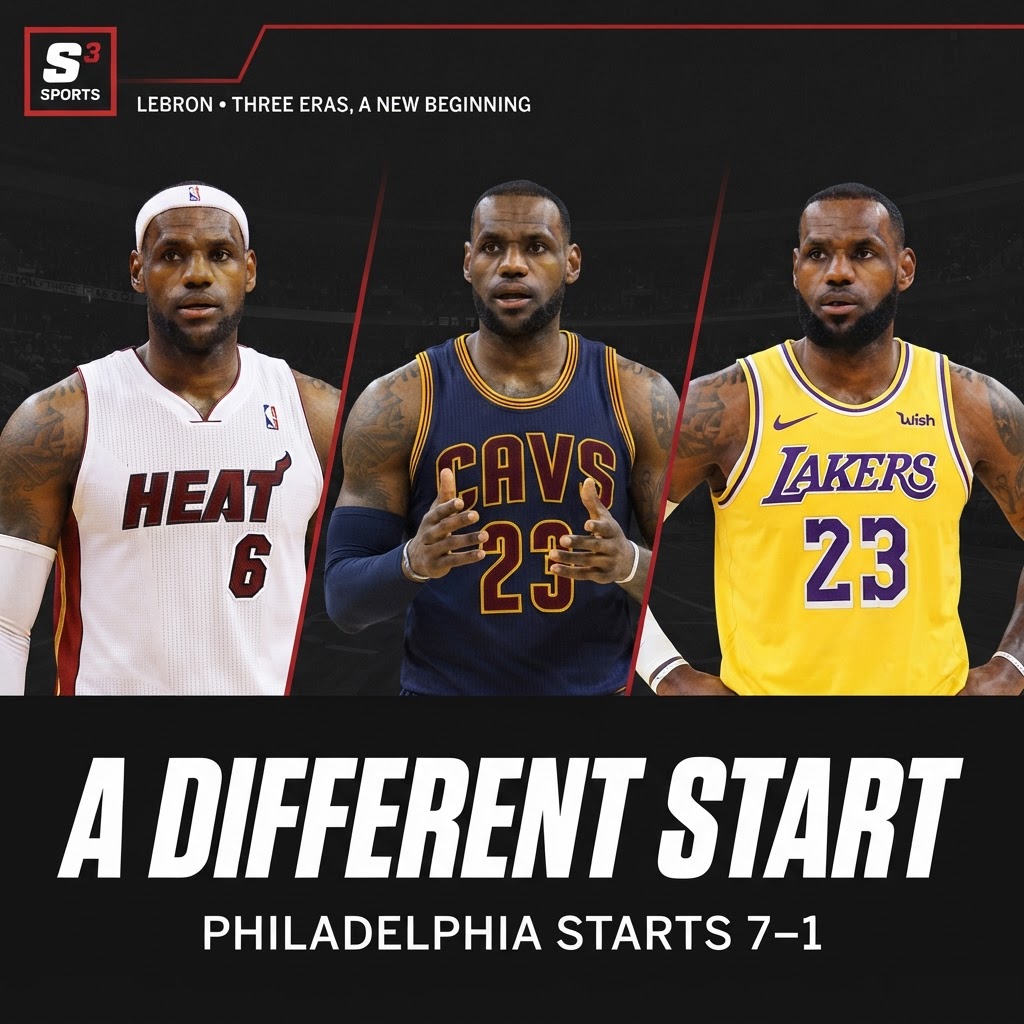
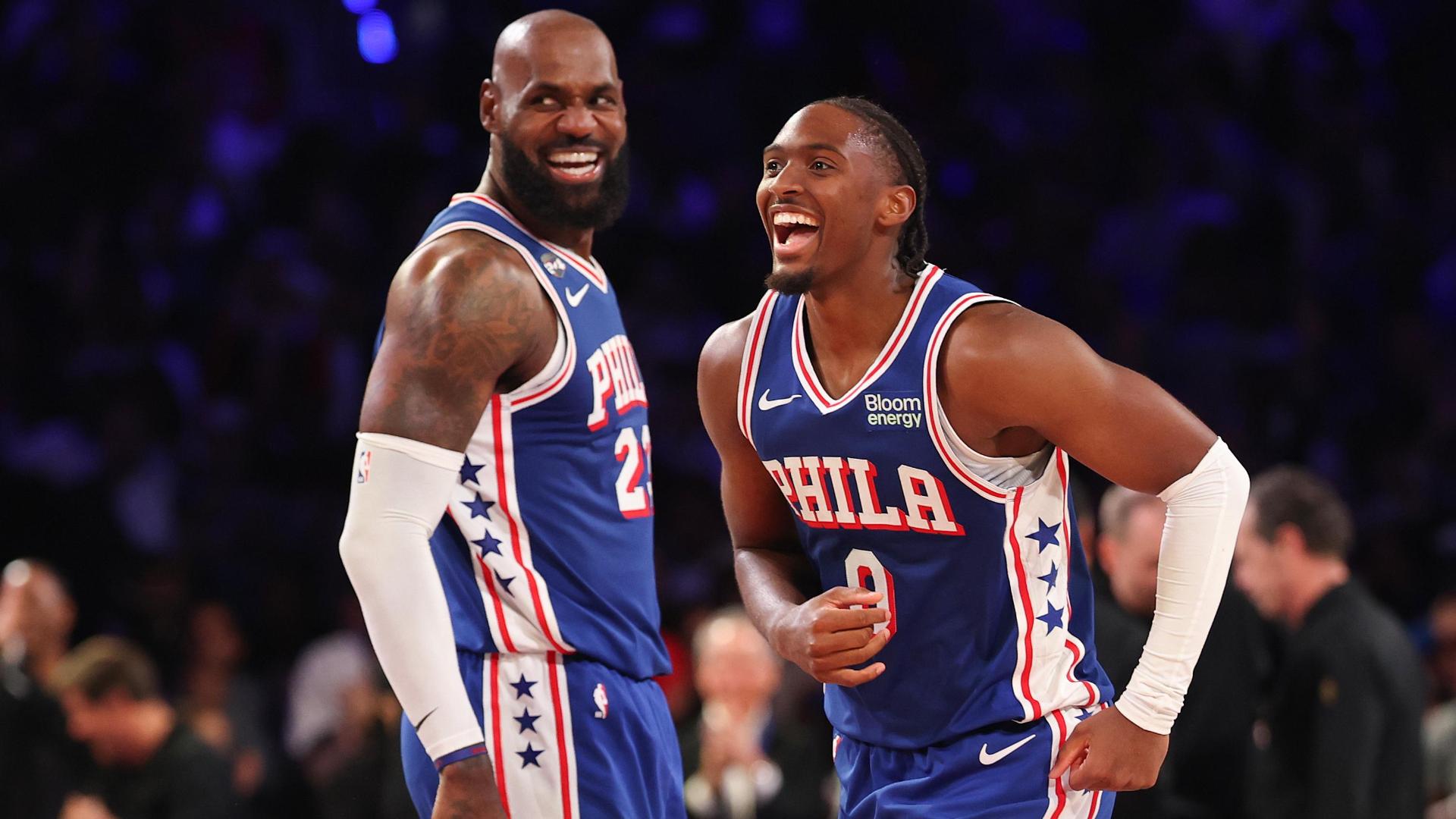
Trailing by as many as 29 points, the 76ers mounted a furious second-half comeback to defeat Cleveland 114–106, improving to 2–0 and giving LeBron James the largest comeback victory of his illustrious NBA career.
James finished with 17 points, 10 rebounds and five assists, surpassing his previous career-best comeback of 27 points, which he matched with the Los Angeles Lakers against Dallas on February 26, 2023.
Twenty-four seasons into his NBA career, James is still finding ways to establish new personal milestones.
A Home Opener Heading Toward Disaster
Philadelphia entered Thursday following an impressive 106–100 victory over the defending champion New York Knicks on opening night.
Nevertheless, the offensive inconsistencies that appeared during that victory became significantly more pronounced against Cleveland.
The Cavaliers jumped ahead 35–18 after the first quarter and extended their advantage to 69–45 at halftime.
Donovan Mitchell was attacking Philadelphia's defense, while the Cavaliers capitalized on turnovers and controlled the interior.
The Sixers, meanwhile, struggled to integrate their four established offensive stars.
At halftime, Joel Embiid, Jaylen Brown and LeBron James had combined for only 18 points. Philadelphia had recorded just five assists against 14 turnovers.
Tyrese Maxey was Philadelphia's most productive offensive player, but his individual success wasn't translating into a functioning team offense.
The Sixers weren't simply missing shots. They were struggling to establish an offensive identity.
The Third Quarter Changed Everything
Philadelphia emerged from halftime looking like a different basketball team.
The defensive intensity increased, the passing improved, and the offense began creating opportunities for multiple players rather than relying on individual shot creation.
Philadelphia outscored Cleveland 37–21 in the third quarter, cutting a 24-point halftime deficit to eight.
At one point, the Sixers closed the margin to just two points.
Cleveland briefly responded, entering the fourth quarter with a 90–82 advantage, but Philadelphia had completely changed the momentum.
The Cavaliers were no longer dictating the game.
Philadelphia Finishes the Comeback
The fourth quarter demonstrated just how overwhelming Philadelphia's starting five can become when its offensive pieces begin working together.
The Sixers eventually took a 96–95 lead before Jaylen Brown helped extend the advantage during a decisive 15–0 fourth-quarter run.
Brown scored 10 points in the final period, giving Philadelphia another dependable offensive weapon when the game mattered most.
Maxey finished with a team-high 32 points and six assists. Embiid added 24 points and seven rebounds.
Philadelphia outscored Cleveland 69–37 in the second half, limiting the Cavaliers to only 16 fourth-quarter points.
Mitchell finished with 32 points and 10 rebounds, but Cleveland could not withstand Philadelphia's second-half surge.
Final Score
| Quarter | Cavaliers | 76ers |
|---|---|---|
| First | 35 | 18 |
| Second | 34 | 27 |
| Third | 21 | 37 |
| Fourth | 16 | 32 |
| Final | 106 | 114 |
S³ Analysis: Philadelphia's Biggest Obstacle Is Chemistry
This victory reinforces an observation that emerged during Philadelphia's opening-night win over New York.
The 76ers possess extraordinary offensive talent, but adding LeBron James and Jaylen Brown represents a dramatic change to an already established offensive structure.
James has spent more than two decades controlling offenses. Brown arrived accustomed to being a primary scoring option. Embiid remains one of basketball's most imposing interior offensive weapons, while Maxey thrives attacking defenses with his speed.
Finding the correct balance requires more than distributing shot attempts.
Philadelphia needs a defined offensive hierarchy.
S³ believes the half-court offense should operate primarily through Embiid, allowing Maxey to become the explosive attacking weapon rather than placing the responsibility for organizing the entire offense on his shoulders.
LeBron can orchestrate possessions as a secondary facilitator, while Brown attacks mismatches and defensive rotations.
The second half against Cleveland offered a glimpse of how effective that arrangement could become.
There are still concerns.
Philadelphia's starters accounted for 105 of the team's 114 points, leaving only nine points from its reserves. That level of dependence on the starting unit will become difficult to sustain throughout an 82-game season.
The extended offensive droughts must also be addressed.
Nevertheless, Thursday's comeback revealed something equally important: Philadelphia has the personnel to overcome enormous deficits when its offense begins functioning collectively.
S³ Final Word
The 76ers have now opened their season with consecutive comeback victories over New York and Cleveland.
Their championship potential is evident, but their offensive chemistry remains a work in progress.
Once Philadelphia establishes a consistent offensive identity, the combination of Embiid, James, Brown, Maxey and VJ Edgecombe could become one of the NBA's most difficult starting lineups to defend.
Thursday wasn't a perfect performance. It was a demonstration of what this team can become.
And for LeBron James, it was another historic chapter in a career that continues to defy expectations.
Twenty-four seasons. A 29-point comeback. One unforgettable Philadelphia homecoming.
S³ | SWEET SCIENCE SPORTS