
S³ | SWEET SCIENCE SPORTS
NBA GAME CENTER | POSTGAME ANALYSIS
October 21, 2026 | Sweet Science Sports
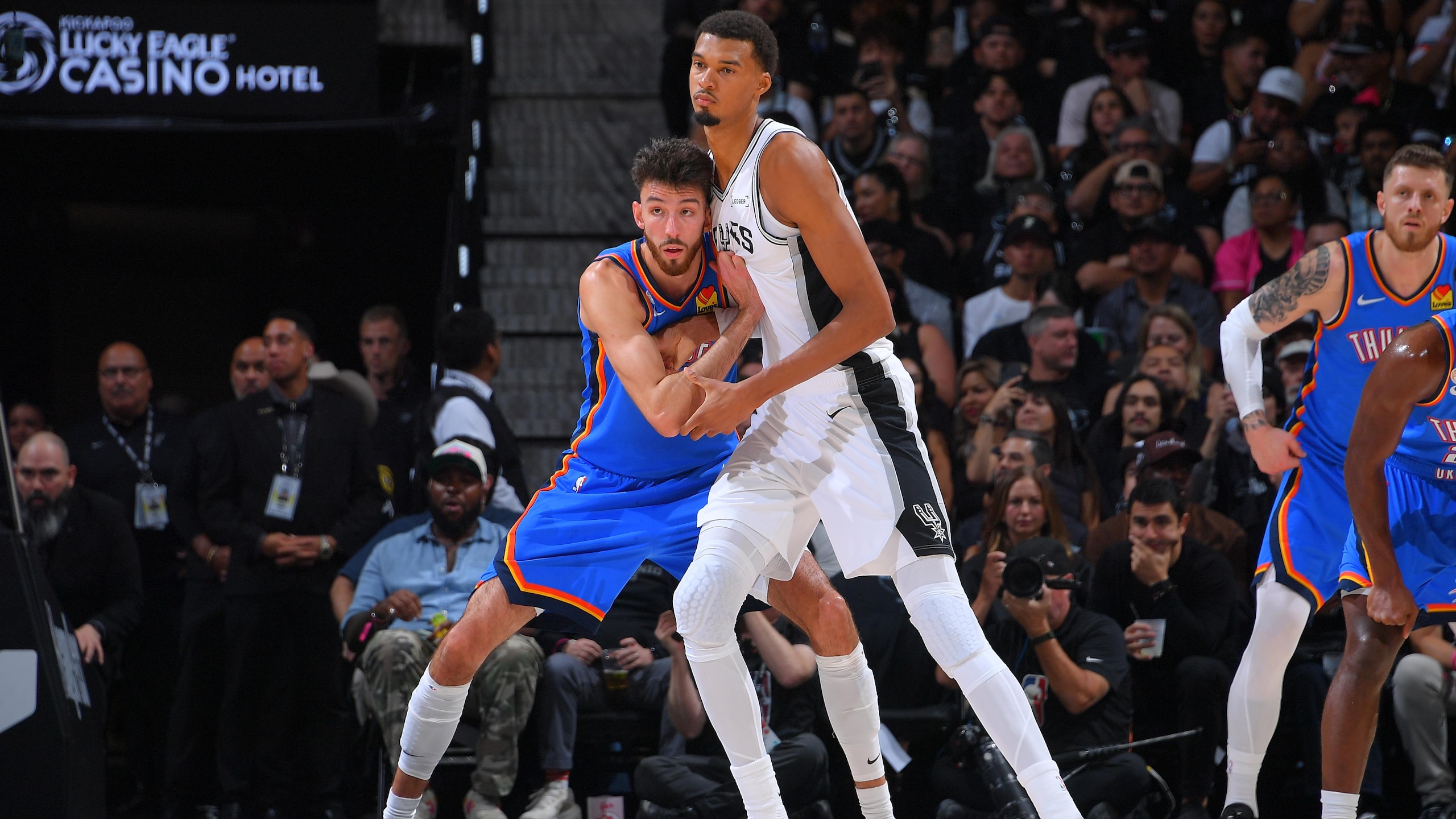
The Oklahoma City Thunder opened their season with a convincing 116–104 victory over the San Antonio Spurs, but the final score doesn't tell the entire story.
Oklahoma City looked like a basketball team operating within a system. San Antonio looked like a group of talented individuals trying to figure things out as the game progressed.
The difference was particularly noticeable in the half-court offense.
San Antonio has the players to compete for another Western Conference championship. What the Spurs haven't consistently demonstrated is an offensive philosophy that allows those players to maximize one another.
Too often, their offense resembles a freelance operation.
And without coordinated movement, freelance basketball can quickly become one player attempting to beat five defenders.
Penetration Without Purpose
One of the most noticeable problems with San Antonio's offense was what happened whenever a player drove toward the basket.
De'Aaron Fox, Stephon Castle or Dylan Harper would penetrate Oklahoma City's defense, reach the paint and suddenly find himself surrounded.
The problem wasn't necessarily the decision to drive. It was the lack of movement from the other four players.
Teammates frequently failed to relocate, cut or establish the passing angles needed to keep the possession alive.
The driver would then be forced to improvise, attempt a contested shot or throw the basketball back outside without having created a meaningful offensive advantage.
That's not how an efficient half-court offense should function.
A player driving to the basket should have four objectives:
- Score if the opportunity presents itself.
- Pass to a teammate in position to score.
- Pass to create another quality scoring opportunity.
- Pass to reset the offense when the initial advantage disappears.
There is nothing wrong with resetting a possession. Recognizing that the defense has successfully disrupted the initial action is part of intelligent basketball.
The problem arises when the player with the basketball has no dependable options because his teammates aren't moving with him.
At that point, an offensive possession becomes a one-on-five exercise.
Oklahoma City's Movement Is Its Greatest Advantage
Shai Gilgeous-Alexander finished with 32 points, but Oklahoma City's offensive structure was arguably its most impressive feature.
The Thunder consistently demonstrated an understanding of where their teammates needed to be.
When one player penetrated, others adjusted their positioning. When the defense collapsed, passing opportunities developed. When the initial scoring option disappeared, the basketball continued moving.
Oklahoma City's offense didn't stop simply because its first action failed.
And this wasn't limited to Gilgeous-Alexander.
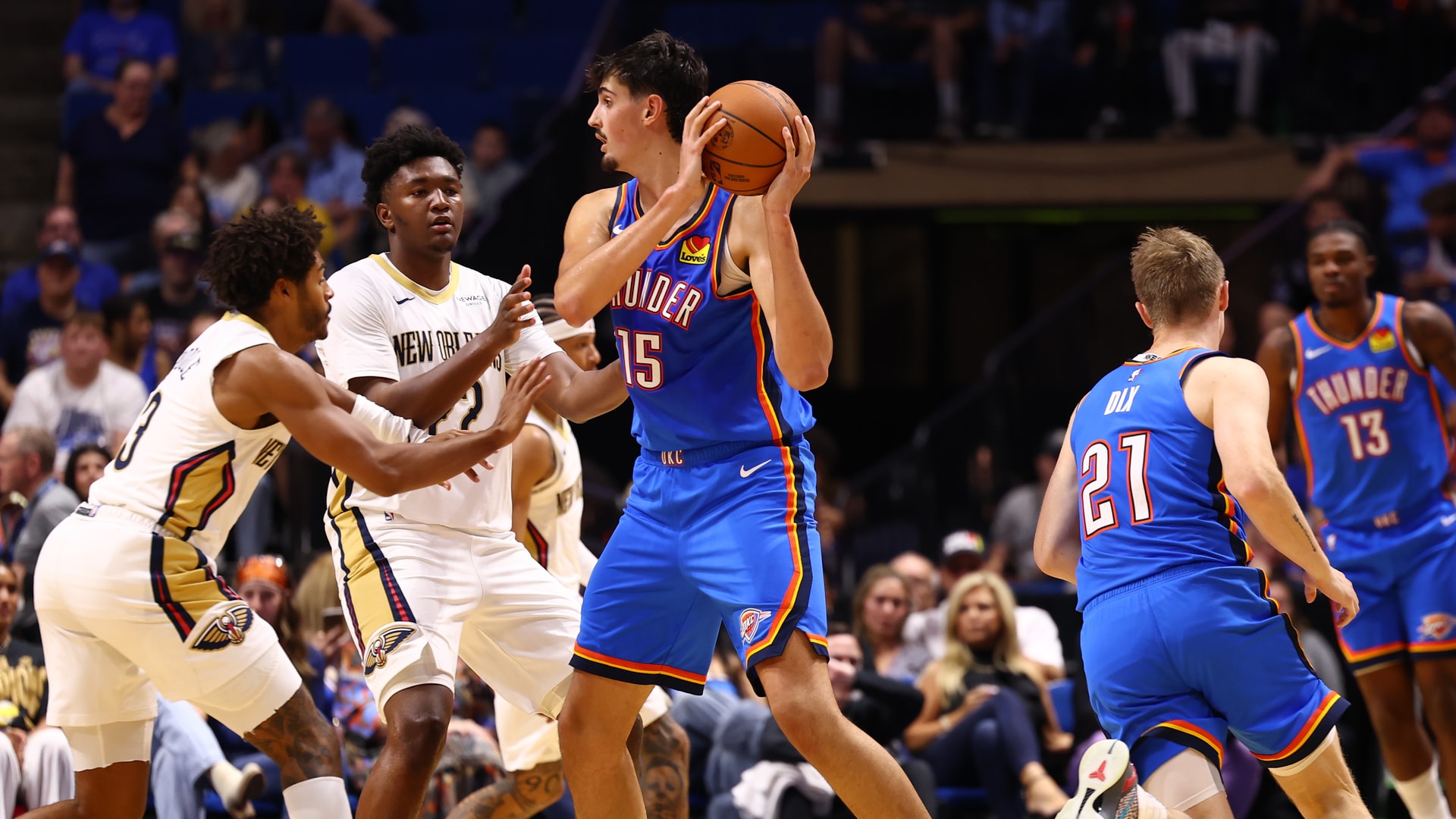
Jalen Williams, Ajay Mitchell, Alex Caruso and Jared McCain provided additional ballhandling, decision-making and offensive production.
McCain was particularly effective, scoring 20 points off the bench while connecting on six of eight three-point attempts.
The Thunder received 48 points from their reserves, compared with 32 from San Antonio.
That's what organizational depth looks like. Oklahoma City doesn't simply have additional players. It has players capable of executing the same offensive principles.
San Antonio's Rotation Raises More Questions
Another concern was San Antonio's limited use of its available personnel.
Julian Champagnie, Keldon Johnson and Luke Kornet functioned as the Spurs' three primary reserves. Harrison Barnes and Carter Bryant received limited opportunities, while T. Reed Jr. played only in the closing moments.
Against a team with Oklahoma City's depth, San Antonio needs more than a short rotation carrying most of the responsibility.
The Thunder can maintain their offensive continuity through substitutions. San Antonio must demonstrate that its second unit can operate within a comparable structure.
Developing that trust and consistency is a coaching responsibility.
Mitch Johnson Needs to Establish a System
This isn't an argument for replacing Mitch Johnson after one opening-night defeat.
San Antonio reached the NBA Finals last season, and the organization has every reason to believe its roster can compete at the highest level.
Nevertheless, past success doesn't eliminate the need for improvement.
Johnson must establish clearer offensive principles governing spacing, movement, penetration and decision-making.
A freelance offense can be extremely effective when players understand how to react to their teammates. Freedom and structure aren't opposites.
But freedom without structure places too much responsibility on the individual with the basketball.
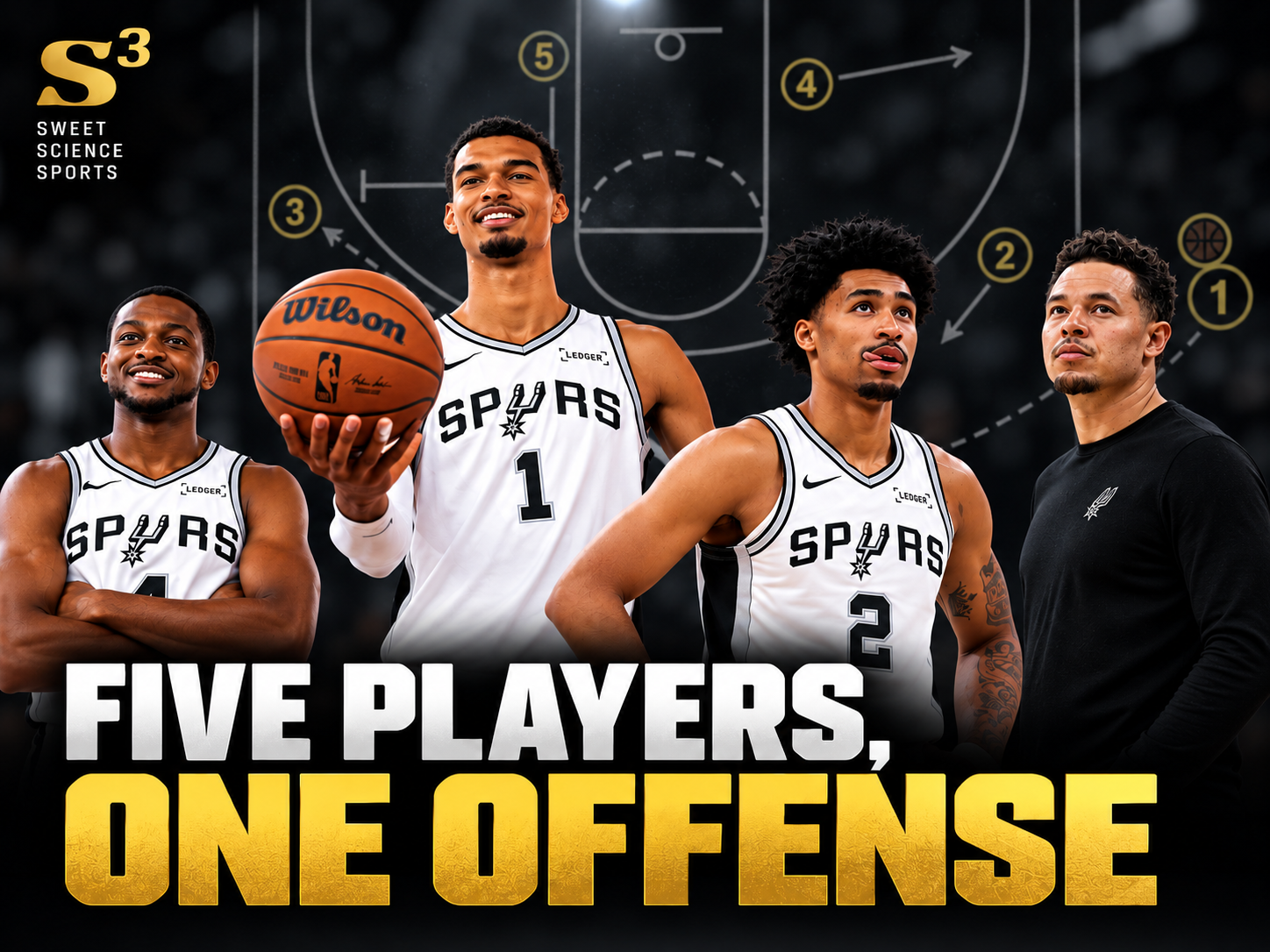
San Antonio cannot spend the season relying on Fox, Castle, Harper and Victor Wembanyama to manufacture offense independently.
The Spurs need a system that connects their talent.
If the same problems remain evident as the season progresses, Johnson's ability to take this team to a championship will become a legitimate organizational question.
S³ FINAL VERDICT
Oklahoma City didn't simply beat San Antonio with better shooting or a stronger bench.
The Thunder demonstrated a more complete offensive philosophy.
San Antonio has the individual talent to challenge Oklahoma City, but its players need to begin functioning as five connected pieces rather than five separate offensive options.
Minnesota also has the personnel and backcourt talent to challenge the Thunder in the Western Conference. San Antonio cannot assume its route back to the Finals will be any easier this season.
The Spurs have time to make the necessary adjustments.
But the standard has been established.
The Thunder play five-man basketball. Until San Antonio develops that same offensive understanding, its talent alone won't be enough.
S³ | Performance Over Potential. Production Over Reputation.