
NBA GAME CENTER | OPENING NIGHT
October 20, 2026 | S³ NBA Postgame Analysis
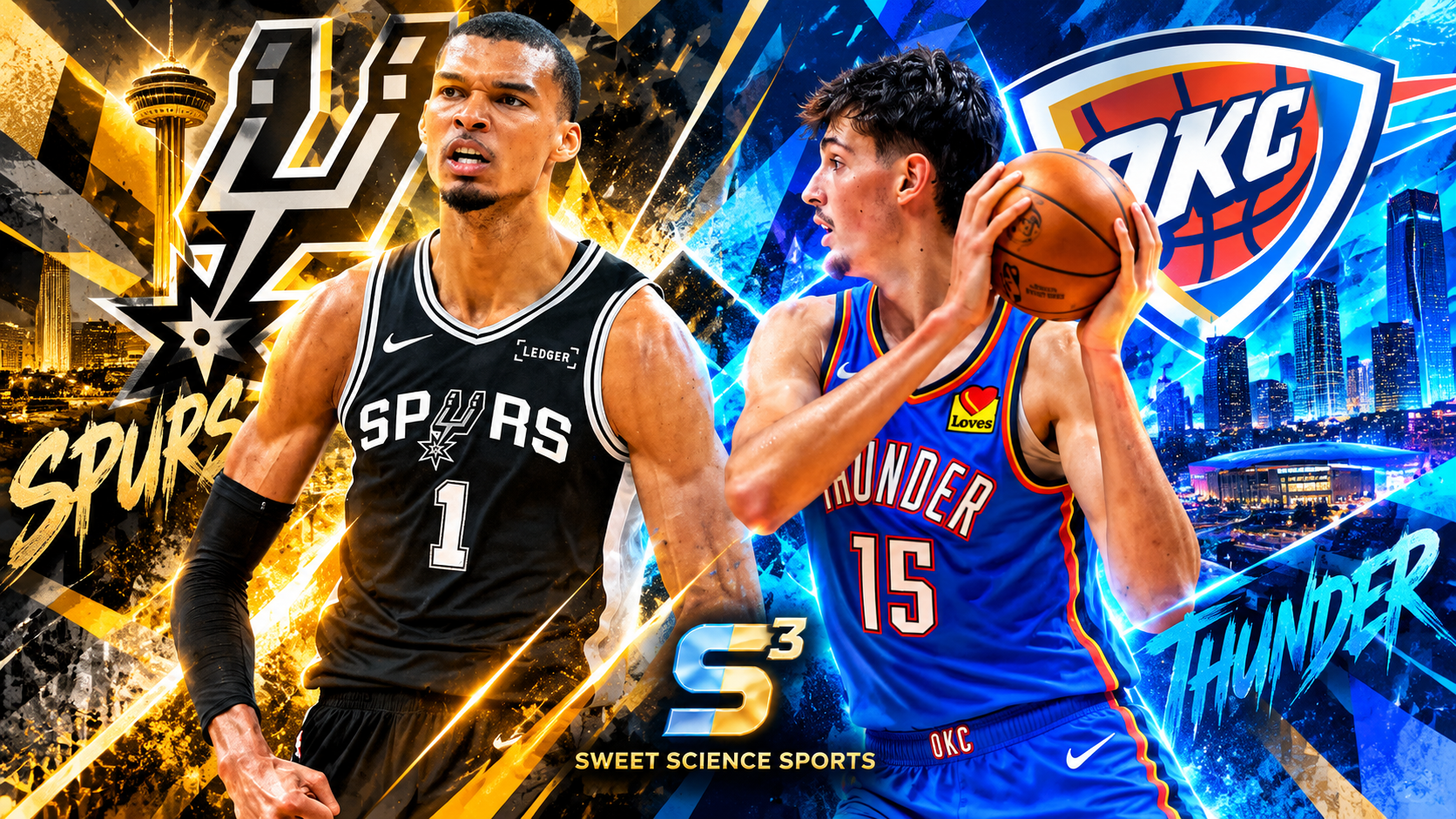
FINAL: Oklahoma City Thunder 116, San Antonio Spurs 104
The Oklahoma City Thunder didn't travel to San Antonio simply to begin another NBA season. They came looking to make a statement against the team that eliminated them in last season's Western Conference Finals.
And they delivered.
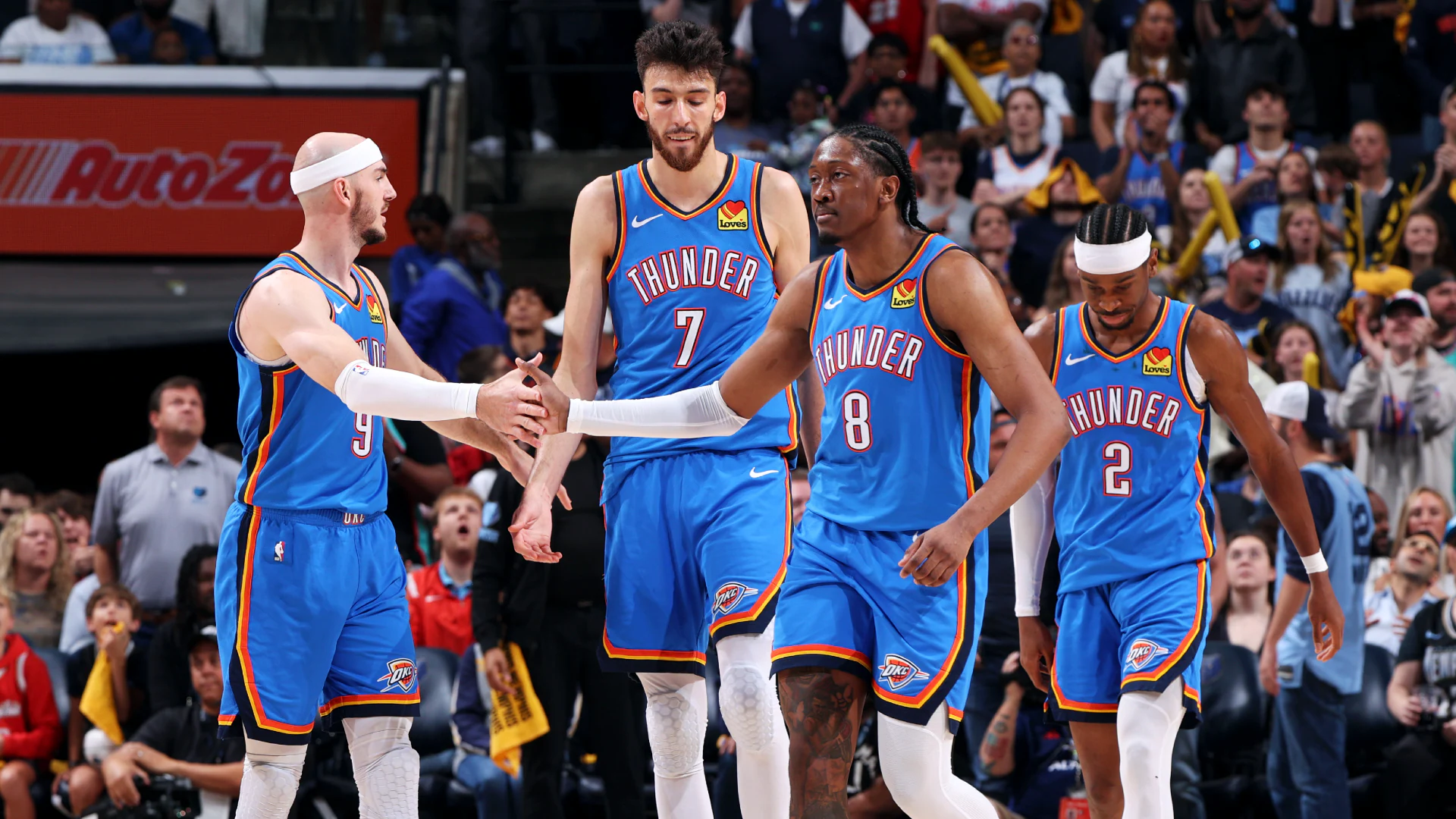
Oklahoma City built a 26-point advantage, survived San Antonio's second-half comeback and walked out of Frost Bank Center with a convincing 116–104 victory.
Shai Gilgeous-Alexander finished with 32 points, but he wasn't the biggest difference between these teams.
That distinction belongs to Oklahoma City's depth.
The Thunder have something San Antonio is still searching for: a complete basketball identity that extends beyond their starting five.
Oklahoma City's Greatest Weapon Isn't Shai. It's Their Depth.
Gilgeous-Alexander is a two-time MVP and one of basketball's premier offensive players. But Oklahoma City's biggest advantage is its ability to maintain offensive continuity regardless of who is on the floor.
The Thunder have multiple players who can handle the basketball, initiate possessions, create their own opportunities and facilitate for teammates.
Jalen Williams, Ajay Mitchell, Cason Wallace, Jared McCain and Alex Caruso give Oklahoma City options most teams simply don't possess.
Opponents cannot concentrate exclusively on stopping Gilgeous-Alexander because Oklahoma City has other players capable of keeping its offense functioning.
Tuesday night provided an excellent example.
Thunder Bench Production
| Player | Points | Minutes |
|---|---|---|
| Jared McCain | 20 | 22 |
| Alex Caruso | 9 | 25 |
| Andy Mara | 7 | 11 |
| Jaylin Williams | 5 | 16 |
| Ajay Mitchell | 4 | 23 |
| Kenrich Williams | 3 | 7 |
| Total | 48 |
McCain was particularly impressive, connecting on six of eight three-point attempts and tying his career high for made threes.
Caruso provided his usual defensive intensity and timely perimeter shooting, while Mitchell contributed six assists.
These aren't players Oklahoma City simply inserts to rest its starters. They're legitimate contributors who understand their responsibilities.
That's the difference.
San Antonio Has a Bench. Why Isn't It Using It?
One of the more revealing aspects of San Antonio's performance was how limited its meaningful bench rotation became.
The Spurs essentially relied on three primary reserves: Julian Champagnie, Keldon Johnson and Luke Kornet.
| Spurs Reserve | Minutes | Points |
|---|---|---|
| Julian Champagnie | 30 | 8 |
| Keldon Johnson | 20 | 10 |
| Luke Kornet | 13 | 4 |
| Harrison Barnes | 9 | 3 |
| Carter Bryant | 6 | 0 |
| T. Reed Jr. | 1 | 0 |
Barnes and Bryant received limited opportunities, while Reed, whom San Antonio drafted, didn't enter until the closing moments when the game was effectively decided.
The concern isn't that every player on the roster should receive substantial minutes on opening night. It's whether San Antonio has established enough trust in its available personnel to develop a dependable rotation.
Oklahoma City received 48 points from its reserves compared with San Antonio's 32.
More importantly, Oklahoma City's bench maintained the team's offensive identity.
The Thunder could substitute players without completely changing how they operated.
San Antonio could not consistently demonstrate that same continuity.
Against a team as deep as Oklahoma City, relying on seven primary rotation players places enormous pressure on your starters.
You cannot expect to beat a complete basketball team simply by having talented names on your roster.
New Season, Same Offensive Problems?
It's one game. Nobody should attempt to define San Antonio's entire season based on its opening-night performance.
Nevertheless, some familiar problems were difficult to ignore.
The Spurs continue taking too many contested three-point attempts, struggling with offensive movement and relying on individual players to manufacture scoring opportunities.
San Antonio attempted 37 three-pointers and converted only ten, finishing at 27%.
The problem wasn't necessarily the volume. It was the quality of the opportunities.
A contested three taken because the offense failed to generate anything better isn't the same as an open three created through penetration, spacing and ball movement.
Oklahoma City demonstrated the difference throughout the evening.
The Thunder repeatedly attacked the defense, drew additional defenders and moved the basketball to available shooters.
San Antonio's offense frequently appeared less organized.
The contrast became especially noticeable during the second quarter, when Oklahoma City outscored the Spurs 31–16.
San Antonio scored only five points during the opening portion of that quarter as Oklahoma City extended its advantage to 26.
The Spurs deserve credit for recovering, but spending the remainder of the night climbing out of that hole ultimately proved too much.
Wembanyama's Defensive Excellence Couldn't Rescue His Offense
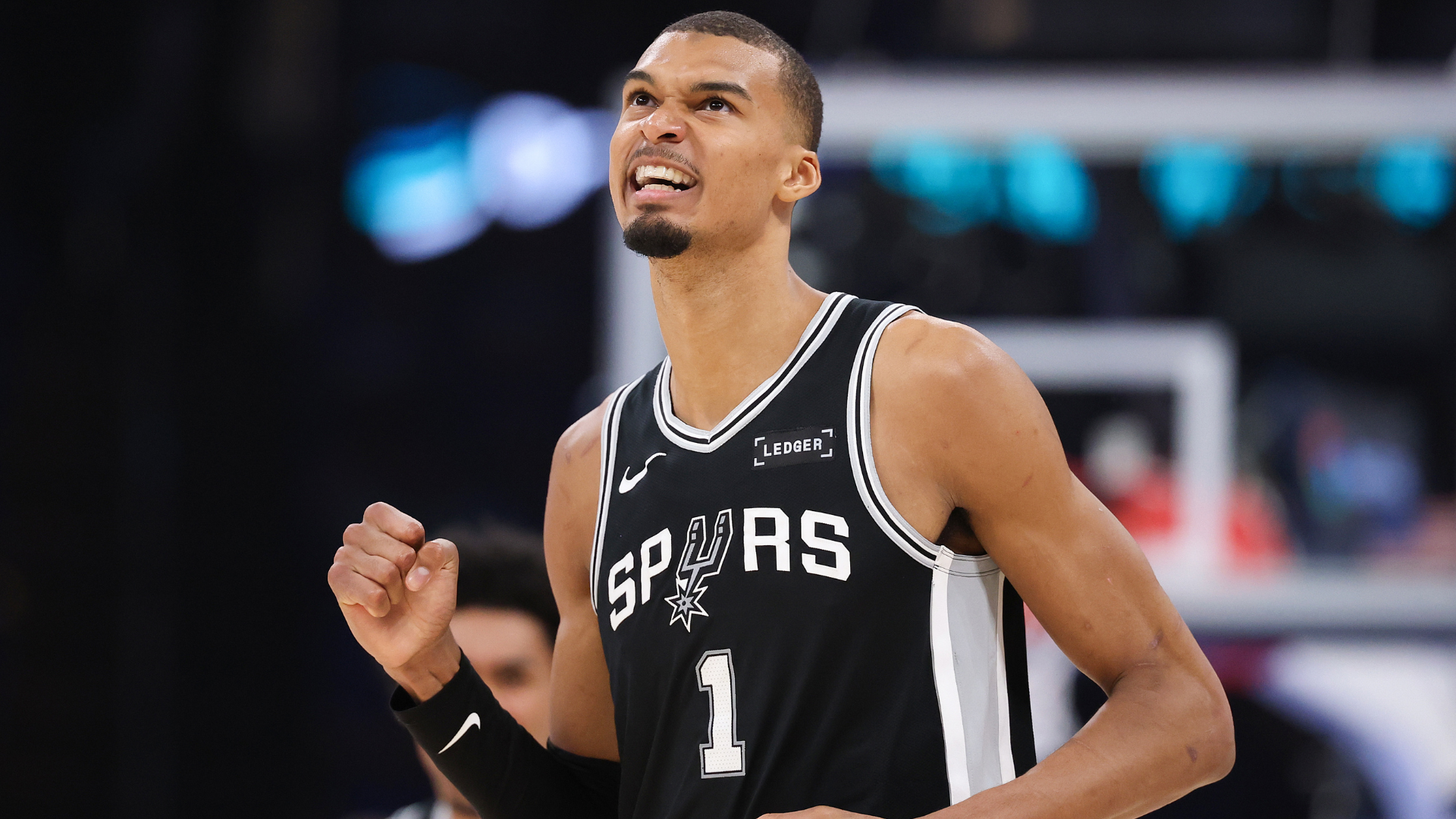
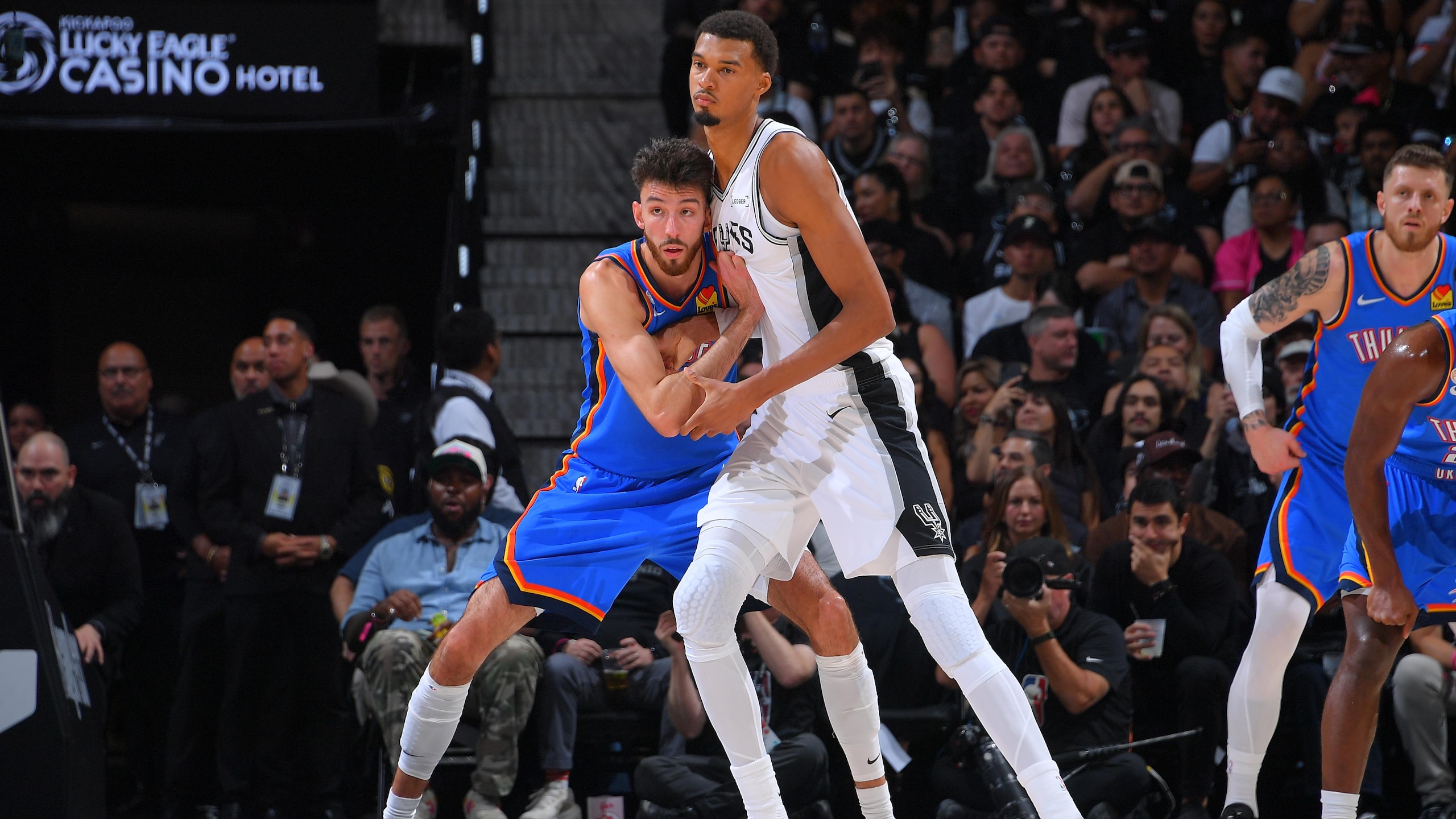
Victor Wembanyama endured an unusually difficult shooting performance.
He finished with 12 points, 13 rebounds and three assists while making just one of 13 field-goal attempts.
He missed his first 12 shots before finally recording a basket.
Still, his offensive struggles didn't diminish his defensive effort.
Wembanyama remained an imposing presence around the basket, repeatedly altering Oklahoma City's attempts and demonstrating why he is one of basketball's most influential defensive players.
But San Antonio must find more effective ways to incorporate him offensively.
A player with Wembanyama's physical advantages shouldn't spend extended portions of a game struggling to receive productive touches while his teammates settle for contested perimeter attempts.
That is an offensive execution issue, not simply an individual shooting issue.
San Antonio Fought Back. Oklahoma City Finished.
The Spurs weren't completely overwhelmed for four quarters.
After trailing 65–44 at halftime, San Antonio produced an impressive third-quarter response, outscoring Oklahoma City 36–28.
Stephon Castle finished with 24 points, including five three-pointers. Dylan Harper contributed 18 points, while De'Aaron Fox added 14 points and seven assists.
San Antonio eventually reduced a deficit that reached 26 points to eight.
For a moment, the comeback appeared possible.
But Oklahoma City never abandoned its offensive approach.
The Thunder continued creating quality scoring opportunities, attacking the glass and trusting their supporting cast.
McCain delivered timely perimeter shooting. Caruso supplied defensive pressure. Isaiah Hartenstein battled through foul trouble and contributed important possessions around the basket.
And when Oklahoma City needed its superstar to settle things down, Gilgeous-Alexander was there.
He finished with 32 points on 13-for-27 shooting, adding five rebounds and four assists.
That's what separates this Thunder team from many other championship contenders.
Shai doesn't have to rescue Oklahoma City every night.
He has teammates capable of helping him win.
S³ FINAL VERDICT: SAN ANTONIO NEEDS A PHILOSOPHY
The Spurs have an impressive collection of talent.
Wembanyama, Fox, Castle and Harper provide San Antonio with a foundation capable of competing with virtually anyone.
But having talented players isn't the same as having a complete basketball team.
San Antonio needs a recognizable offensive philosophy, a more dependable rotation and a system that consistently creates opportunities for its personnel.
It also needs to establish greater trust in its bench.
Oklahoma City has already demonstrated what that looks like.
Its 116–104 victory wasn't simply about Gilgeous-Alexander scoring 32 points or McCain knocking down six three-pointers.
It was about an entire roster understanding how to contribute to a winning basketball system.
San Antonio won the Western Conference last season, but Oklahoma City came into its building Tuesday night determined to demonstrate that the balance of power remains contested.
The Thunder delivered that message.
The Spurs have an entire season to respond.
S³ | PERFORMANCE OVER POTENTIAL. PRODUCTION OVER REPUTATION.