
One of the biggest problems in modern boxing media is the blurring of the line between analysis and fandom. There is nothing wrong with rooting for a fighter. Most fans are naturally going to support the fighter they identify with, whether through nationality, ethnicity, personality, or style. That is part of sports.
The responsibility of a boxing analyst is different.
If you call yourself an analyst or expert, your opinions should be supported by evidence, context, and technical explanation-not emotion or predetermined narratives. Every conclusion should answer one question: Why?
One issue S³ has observed is not simply whether fighters get second chances, but how defeat is discussed. The language surrounding a loss often shapes a fighter's legacy more than the loss itself.
Take Floyd Mayweather vs. Manny Pacquiao. Floyd retired undefeated, won world championships in five weight classes, and defeated numerous Hall of Fame-caliber opponents. Yet, some boxing platforms have reduced discussions of his legacy to one fight-the Pacquiao bout. Meanwhile, Manny Pacquiao's legacy remains celebrated despite multiple losses before and after fighting Mayweather. Pacquiao deserves recognition as an all-time great, but the question remains: Why does one fighter's legacy become centered around a single event while another's career is evaluated through its full body of work?
Another example is Devin Haney vs. Ryan Garcia. Much of the post-fight discussion focused exclusively on Haney being knocked down three times. Far less attention was paid to the fact that Haney was boxing well for significant portions of the fight, winning rounds with his jab, footwork, and combinations before the knockdowns changed the scorecards. Context also mattered. Garcia came in overweight and later tested positive for a banned substance. Those facts became secondary in many conversations, while some commentators immediately declared that Haney should retire or that he had been "exposed." A boxing analyst should examine the complete fight, not reduce it to three highlight clips.
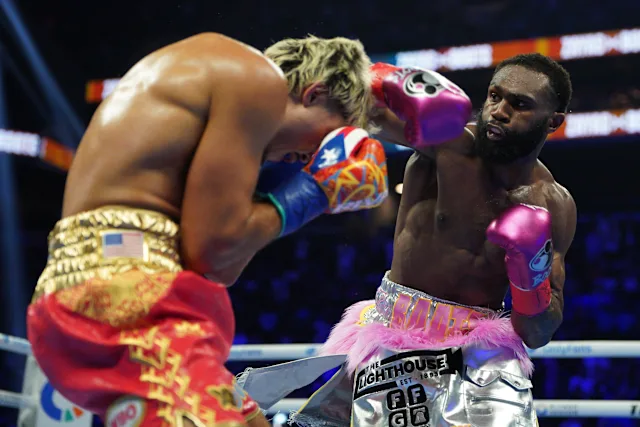
Now consider Xander Zayas after his loss to Jaron "Boots" Ennis. Much of the boxing community has encouraged Zayas to rebuild, learn from the defeat, and continue developing because he is still young. That is a reasonable position. The question S³ raises is whether that same grace is consistently extended to every fighter. If Boots had suffered a similar defeat at this stage of his career, would the dominant narrative have been patience and development, or would it have been that he was overrated and finished? Analysts should be willing to ask that question honestly.
This is why nuance matters.
A fighter can lose while boxing well. A fighter can score knockdowns and still lose rounds. A stoppage does not erase everything that happened before it, just as a victory does not erase technical flaws that need improvement.
If an analyst says a fighter lacks discipline, show the rounds where he abandoned the jab or ignored his corner. If a fighter was "exposed," identify the technical flaws that were repeatedly exploited. If a fighter boxed effectively for much of the contest before suffering a late stoppage, explain both realities instead of focusing only on the ending.
The purpose of boxing analysis is to educate fans, not reinforce narratives. That requires discussing footwork, distance control, timing, ring generalship, punch selection, defense, conditioning, adjustments, and scoring criteria. It also requires acknowledging context, even when it complicates the story.
At Sweet Science Sports (S³), our standard is simple:
Respect the evidence. Explain the opinion. Remove the bias.
Analysis should be rooted in what happened inside the ropes-not in who the analyst wanted to win.
S³ - Sweet Science Sports