
S³ Fight Notes + Career Management Breakdown
Keyshawn Davis won exactly the kind of fight he was supposed to win.
The official scorecards read:
The important detail? Davis was hit with a two-point deduction for the body slam - which means those 118-108 cards are technically 12-0 scorecards with the deduction factored in.
That aligns directly with the S³ scorecard: Keyshawn Davis, 12 rounds to none.
This wasn't a competitive rematch. This was a technical separation. And it raises the bigger question: why was Nahir Albright in this fight at this stage of his career?
Immediate Separation
The gap showed early. Davis controlled the first four rounds with ease - owning the jab, the center of the ring, the pace, the cleaner exchanges, and the body work. Albright's corner kept demanding urgency. Be first. Push him back. Take the initiative.
The problem was simple: he couldn't.
Davis was faster to the trigger, sharper with his reactions, and cleaner with his execution. This looked less like a rivalry and more like a fighter operating a level above.
The Only Real Albright Moment
Round 5 gave Albright his best sequence. He landed the clean right hand. Davis acknowledged it. The crowd reacted. For a moment, there was life.
But one moment does not equal a round. The broader pattern never changed. Davis remained the cleaner, more effective fighter from bell to bell.
The Confidence Break
The real turning point came around Round 6 - not because Albright got hurt, but because his confidence visibly faded. That matters in boxing. Confidence affects commitment, rhythm, timing, offensive creativity, and willingness to engage.
By the middle rounds, Albright was pulling punches back early, hesitating before entering, freezing after feints, and defaulting to clinches. That's not just physical struggle. That's a fighter realizing the puzzle may not be solvable.
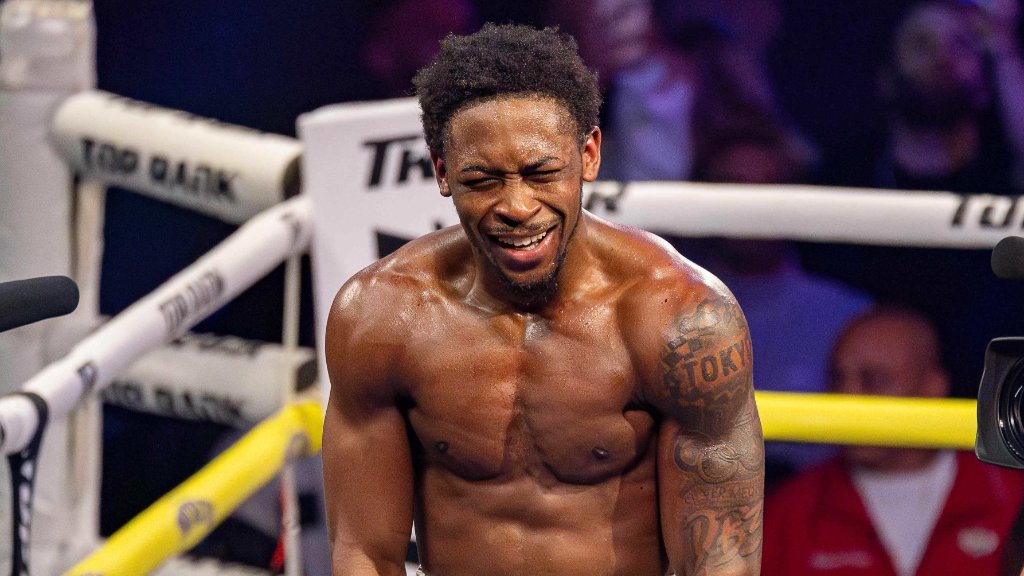
The Body Slam Changed the Math, Not the Fight
Davis lost two points for the body slam. Fair - it was unnecessary. But it did not change the larger fight story. He was still in control. That deduction altered the official arithmetic, not the actual command of the fight.
Two judges effectively saw a complete shutout once the deduction was factored in. That tells the story clearly.
Championship Rounds
This is where elite separation becomes obvious. Davis looked fresh late - still explosive, still balanced, still snapping punches, still dictating pace. Albright deserves credit for toughness. He never quit. But surviving and competing are not the same thing.
The Bigger Conversation: Did Albright Take the Wrong Fight?
Yes. And not because he lacks courage - because boxing is not just about courage. It's about timing.
The first fight gave Albright credibility. He showed he could compete. People remembered the effort. That was useful career equity. Not every respectable performance needs a rematch. Sometimes the smart move is preserving the stock gain.
This is the part that matters most: the Keyshawn Davis from the first fight is not the Keyshawn Davis now. This version is stronger, more polished, more experienced, sharper defensively, more dangerous to the body, and physically more mature. That changes the risk equation entirely.
If you're Team Albright, the better path may have been Frank Martin - unfinished business, a debated prior performance, a stylistically more manageable matchup, meaningful career leverage. Instead, Albright stepped back in with a fighter who had clearly evolved.
Final Verdict
Nahir Albright is tough. He's durable. He belongs in the contender pool. But this was the wrong assignment - not because he isn't good, but because he fought the wrong version of Keyshawn Davis.
The first fight gave him respect. This one gave him frustration. And in boxing, those are two very different outcomes.
S³ Official Scorecard
Keyshawn Davis 12 - Albright 0
Official: 118-108 · 118-108 · 117-109