Sweet Science Sports | NFL Week 4 | October 5, 2026
The gap between the NFL’s strongest teams and its weakest is visible. The separation among the contenders remains unsettled. Sunday left us with several teams that can make a case, plenty that still have work to do, and a reminder that preparation and coaching can change the direction of a season.
Some teams still look as though they are trying to knock off the rust. Communication breaks down on defense. Offenses struggle to establish timing, protect their quarterbacks and sustain drives. By Week 4, those problems deserve more attention than a promise that everything will eventually click.
A longer preseason deserves consideration. The benefit would come from giving units more meaningful work together: quarterbacks with their receivers, offensive linemen handling protection calls, and defenders learning how their responsibilities fit. Coaches would have to use the extra time productively. Regular-season games are expensive places to discover that a team is underprepared.
That uneven preparation also makes the early hierarchy difficult to judge. Beating a struggling opponent tells us something. Beating quality opponents consistently, adjusting when the first plan fails and surviving an imperfect performance tell us much more. Several teams look capable of contending. I have yet to see enough separation to declare one the clear standard everyone else must chase.
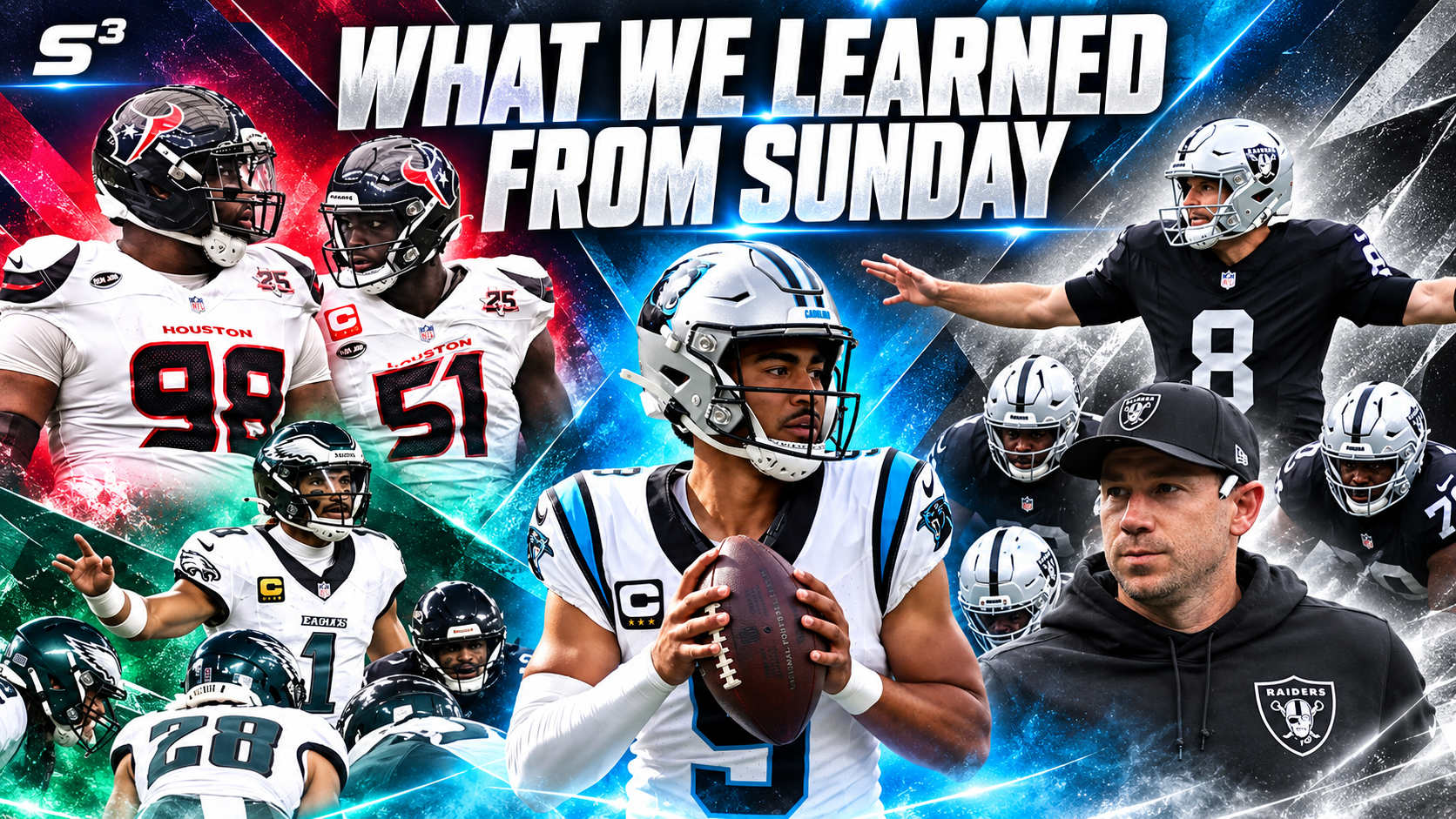
Las Vegas offers one of Sunday’s strongest examples of how much coaching matters. There is a different energy around the Raiders under Klint Kubiak. At 3-1, they have earned a place in the playoff discussion. They have also scored at least 26 points in every game, giving that optimism a foundation in production.
The Kubiak blueprint starts with stability. Choosing Kirk Cousins to lead the offense gives the Raiders experienced quarterback play while Fernando Mendoza develops. That approach allows Las Vegas to compete now and gives its young quarterback a chance to learn inside a functioning team. When Mendoza eventually gets his opportunity, the goal should be for him to inherit an established foundation.
The 30-27 loss to Kansas City showed both the progress and the remaining work. Cousins threw for 365 yards and two touchdowns, and the Raiders still had a final opportunity to change the outcome. An illegal shift and an interception as Cousins was hit ended it. Kubiak also has decisions to review, including a failed fourth-and-2 attempt after taking a made field goal off the board. The direction looks promising; finishing close games is the next test.
Bryce Young supplies the quarterback-development side of the discussion. His 329 yards and two touchdown passes helped Carolina beat Detroit 32-26 and reach 2-2. He belongs in the early MVP conversation, with continued production and more wins needed to strengthen that case.
Young deserves credit for his growth. His performance also reinforces why a quarterback’s development must be judged alongside the coaching, protection and receiving talent around him. Different quarterbacks take different paths. A team has to recognize what its player needs and build an environment that helps him improve.
Philadelphia’s offense is raising a different set of coaching questions. The Eagles installed a new scheme under Sean Mannion this year, but the results still have the stale quality that makes meaningful progress hard to see.
Jalen Hurts completed 12 of 27 passes for 93 yards against the Rams. Philadelphia went 0-for-12 on third down and failed to score on its final six possessions in a 24-20 loss. That is enough to demand a review of the entire offensive operation: quarterback decisions, protection, route design, play sequencing and adjustments.
Hurts has responsibilities within that failure. The staff also has to create answers when defenses take away the preferred approach. If formations, personnel and situations keep signaling what is coming, the offense makes the opponent’s job easier. The concern is whether Philadelphia can create easier completions, punish pressure and keep drives moving without needing exceptional individual plays.
Missing DeVonta Smith, Dallas Goedert and Lane Johnson, then losing Saquon Barkley, clearly made Sunday harder. Those absences also tested the staff’s ability to adapt. An offense needs a workable plan for the players available, especially once the game starts moving away from its original script.
Houston provides another warning: a great defense’s reputation can outlast its performance. The Texans finished last season first in yards allowed and second in points allowed. They have already allowed two 30-point games through four weeks. On Sunday, Dallas scored 34, and CeeDee Lamb caught a career-high 17 passes for 189 yards and the winning touchdown.
The Texans’ offense gave them 30 points and a late lead. Their defense could not protect it. That makes this defeat especially damaging: Houston had the scoring necessary to win and still fell to 0-4.
The peak of a great defense can be brief. Changes in personnel, health and execution can quickly reduce the margin that once made it dominant. There is no universal two-year expiration date: Seattle led the NFL in scoring defense for four consecutive seasons from 2012 through 2015. That longer run shows what sustained excellence can look like, while Houston’s start shows why teams cannot assume it will carry over.
The season remains open for teams that can improve quickly. Kubiak’s Raiders are building a foundation. Young is giving Carolina more reason to believe in its quarterback. Philadelphia needs an offense that can adapt, and Houston needs its defense to earn its reputation again. The teams that solve those problems will have a chance to create the separation we are still waiting to see.