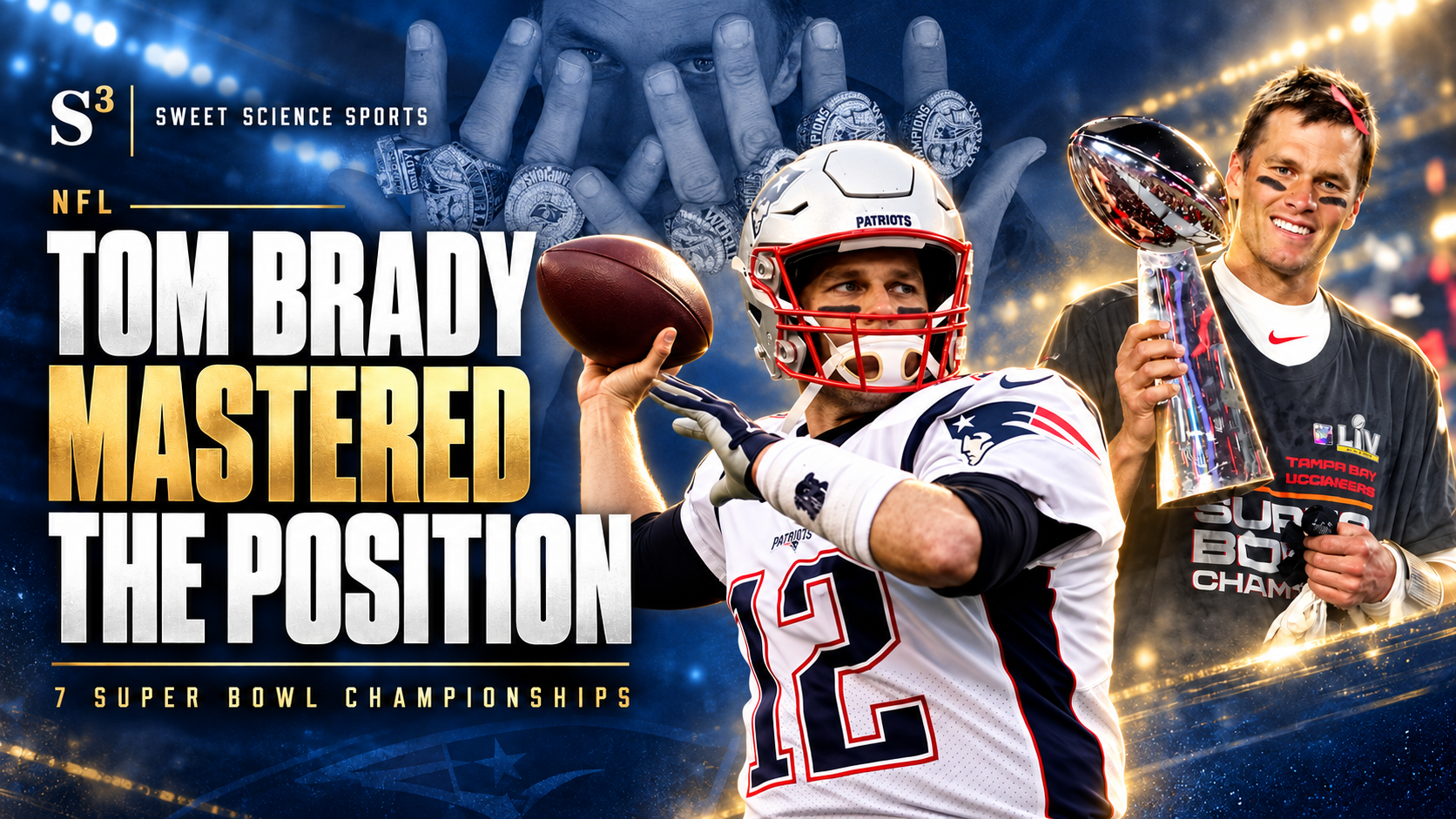

When I watch Tom Brady, I see a quarterback who mastered the position. He understood how to connect preparation with execution, how to keep an offense moving, and when a defense had given him an opportunity worth attacking.
My assessment of Brady’s raw arm strength is around 7.5 or 8 out of 10. That is an opinion, not a measured scouting grade. It also describes his usual power, not an absolute ceiling. With his feet set and room to drive through a throw, he could produce what I would call a 9, with an occasional 10.
Aaron Rodgers represents the other end of that comparison. His best throws made exceptional arm talent look routine. He could generate velocity from awkward positions and deliver passes that made you wonder how he got that much power behind them.
Rodgers has one Super Bowl championship. Brady finished with seven. Those totals cannot isolate quarterback ability from coaching, defense, protection, and teammates. They do, nevertheless, give us reason to examine everything Brady contributed beyond the power of his arm.
Brady controlled the timing
Getting the ball out quickly shortened the opportunity for a pass rush to affect him. Brady’s timing helped protection, and protection gave him the room to deliver accurately.
NFL Next Gen Stats recorded his average time to throw at 2.57 seconds in 2020, 2.50 in 2021, and 2.45 in 2022. In Super Bowl LV, that figure fell to 2.27 seconds.
Those numbers measure the time from snap to pass release. They reflect the design of the offense as well as the quarterback’s decisions and delivery.
There was no universal three-second expiration date on a play. Brady understood when the ball needed to leave and when protection allowed him to wait. Gronkowski’s second touchdown in that Super Bowl came after Brady’s initial reads produced no throw and Gronkowski redirected his route.
Small gains kept the offense flexible
Four yards on first down and four more on second create third-and-two. That simple example explains why taking available yards can matter so much.
On third-and-short, the defense must account for a wider range of options. On third-and-long, it can concentrate more heavily on defending the pass. Staying ahead of the chains helps preserve the offense’s choices.
Brady had the patience to accept an available completion. A short throw could extend a possession, give a receiver room to run, or keep the next play manageable.
The opportunity to attack deeper remained part of the offense. Underneath routes can draw defenders forward, while play-action can move them away from the space a receiver is entering. The quarterback still has to recognize the opening and deliver on time.
In Super Bowl LV, Brady completed 10 of 13 play-action passes for 135 yards and all three of his touchdowns. That is a concrete example of timing and defensive positioning working together.
Tampa showed that his mastery traveled
Brady arrived in Tampa Bay and won a championship in his first season, at age 43.
The adjustment took time. The Buccaneers were 7–5 entering their bye, then won their final four regular-season games to finish 11–5. They followed with four playoff victories, completing an eight-game winning streak with a 31–9 Super Bowl win over Kansas City.
Brady threw 40 regular-season touchdowns. He finished the Super Bowl with 201 passing yards, three touchdowns, and no interceptions. Tampa’s defense delivered its own decisive performance, holding the Chiefs without a touchdown.
That championship strongly challenged the idea that Brady’s success depended entirely on New England. He learned different terminology, worked with a different coaching staff, and helped a new offense become a champion.
My case for Brady rests on his command of the whole position. He had the arm to execute every required NFL pass, the preparation to recognize opportunities, and the discipline to keep choosing productive plays.
Tom Brady mastered the position because he consistently put his ability to work for the offense.
Sources
Tampa Bay Buccaneers - Quick Throws and Rookie Impact
Tampa Bay Buccaneers - Super Bowl LV Next Gen Stats
Tampa Bay Buccaneers - Brady’s first season and seventh championship
Tampa Bay Buccaneers - 2020 season history
Pro Football Reference - Aaron Rodgers career record