Games are not decided solely by what teams score or prevent. They are decided by who controls the fundamental dimensions of play: time, possessions, space, and energy.
Every sport expresses this truth differently, yet the principle remains universal among the elite. The best teams and fighters share a singular understanding: limit the opponent's ability to exist within the game itself.
THE S³ LAW OF CONTROL: Three Layers of Dominance
Layer 1: Defense Creates Offense (Direct)
The most visible expression of control appears in the box score-steals that ignite fast breaks, blocks that trigger transition opportunities, turnovers that compress the field. This is immediate and measurable. The defense forces an error, and the offense capitalizes before the opponent can reset.
Layer 2: Offense Limits Offense (Indirect Defense)
Here lies the sophistication that separates elite systems from competent ones. Extended drives, shot clock utilization, and deliberate tempo management don't register as defensive statistics. Yet they accomplish something far more powerful: they eliminate opportunities before they materialize. An offense that consumes 18 seconds and executes a purposeful possession is simultaneously removing the opponent's chances to play. The opponent cannot execute if they never touch the ball.
Layer 3: Elite Offense Prevents Offense (Structural Control)
At the highest level, superior teams don't simply defend better-they make it impossible for opponents to initiate their system. The boxing jab that controls distance before the cross ever arrives. The possession-heavy system that neutralizes a quick-strike offense before it develops. Here, dominance becomes preventative rather than reactive.
FOOTBALL: The Doctrine of Time
Super Bowl XXV: When Starving Beats Stopping
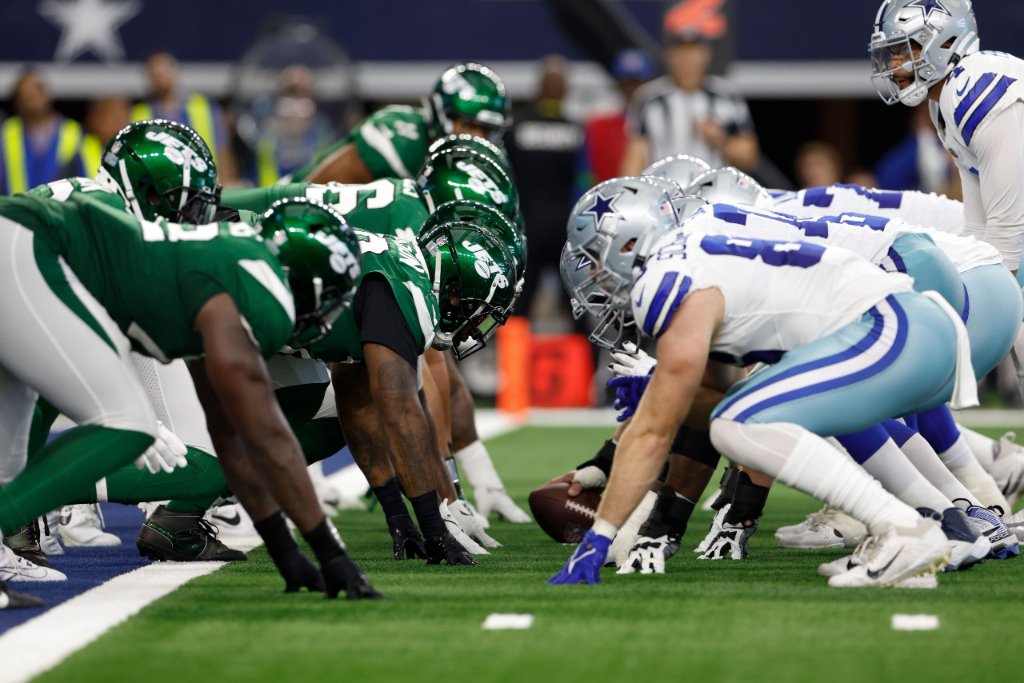
Dallas Cowboys line of scrimmage during an NFL football game against the New York Jets on Sunday, September 17, 2023, in Arlington, Texas. (AP Photo/Matt Patterson)
The 1991 Super Bowl remains the clearest blueprint for this principle. The New York Giants possessed the ball for 40 minutes and 33 seconds-consuming two-thirds of regulation. The Buffalo Bills, quarterbacked by Jim Kelly and featuring Thurman Thomas, one of the most explosive offenses of the era, never found rhythm.
The conventional narrative celebrates the Giants' defense. The deeper truth: the Giants never allowed Buffalo to play.
Kelly threw for 331 yards that day. But possessions, not yardage, decide games. By the time Buffalo touched the ball, energy had already been spent watching. By the time they drove, the game had already been determined.
S³ Principle: Time of possession is opportunity suppression. You don't stop an offense-you starve it.
BASKETBALL: The Possession Economy
The game moves faster, but the principle deepens rather than changes. Shot clock becomes an invisible defense.
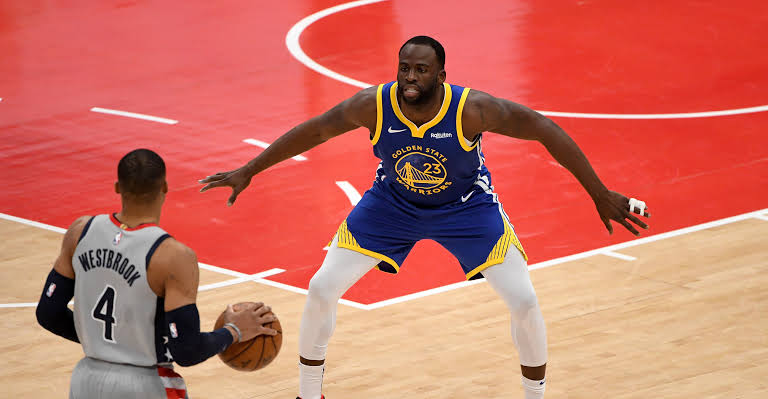
Draymond Green in the traditional perimeter defensive stance.
A team that uses 20-24 seconds per possession, moves the ball with purpose, and controls tempo doesn't simply score. It reduces total possessions-a mathematical advantage masked as offense. The Phoenix Suns' "7 Seconds or Less" system requires elite execution, but it also requires opponents to match a pace they didn't choose.
When San Antonio's Spurs faced Phoenix, the narrative focused on a clash of styles. The reality was tempo warfare. The Spurs won fewer possessions but controlled which game was being played.
S³ Principle: The team that controls pace decides the nature of competition.
BOXING: The Architecture of Attrition
Boxing reveals the deepest layer: control through energy depletion.
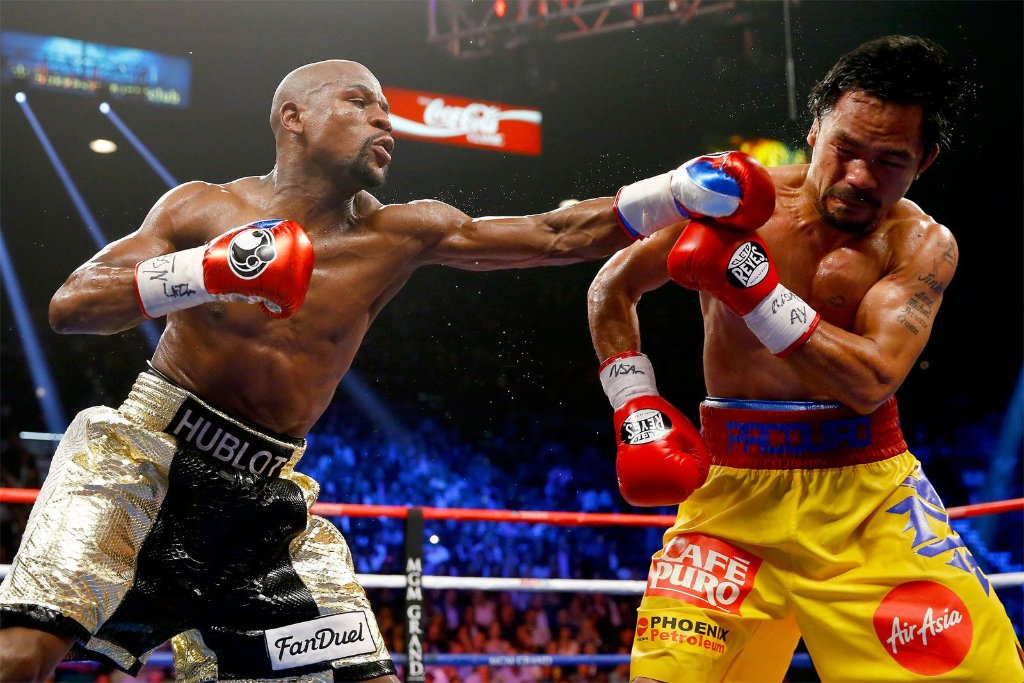
Manny Pacquiao (right) and Floyd Mayweather, Jr., in their 2015 welterweight bout; Mayweather won in a unanimous decision.
The jab-boxing's most underrated weapon-is offense disguised as defense. It controls distance, disrupts timing, and most critically, it denies entry. Every jab that finds its target or forces a miss accomplishes dual purpose: it prevents the opponent's attack while consuming their energy preparation.
Slips, rolls, and defensive adjustments do more than evade damage. They force misses. And a missed punch is a body shot without contact-it costs energy, builds frustration, and weakens subsequent output.
Over time, the opponent doesn't lose on the scorecards; they lose their ability to generate force.
S³ Principle: Defensive attrition-weakening through structure, not just striking.
THE UNIVERSAL TRUTH
| Dimension | Sport | Mechanism |
|---|---|---|
| Time | Football | Extended drives absorb clock |
| Possessions | Basketball | Tempo controls ownership frequency |
| Space | Boxing | Jab prevents entry and positioning |
| Energy | All Sports | Forced inefficiency depletes reserves |
The Distinction That Matters
Defense reacts. It stops what has already begun.
Control prevents. It neutralizes the initiation itself.
A steal is a reaction. Clock control is architecture.
THE HIERARCHY
Weak teams react to the game happening around them.
Good teams execute effectively within established parameters.
Great teams control portions of the contest.
Elite teams control the entire structure-they choose whether to accelerate or decelerate, whether to engage or exhaust, whether to compete in a game of efficiency or attrition.
THE FINAL LAW
Control time. Control possessions. Control space. Control energy.
And when you command all four, you control the outcome.
"Control the game, and you control the opponent's existence." - S³