
S³ Hall Of The Sweet Scientist
Tom Molineaux
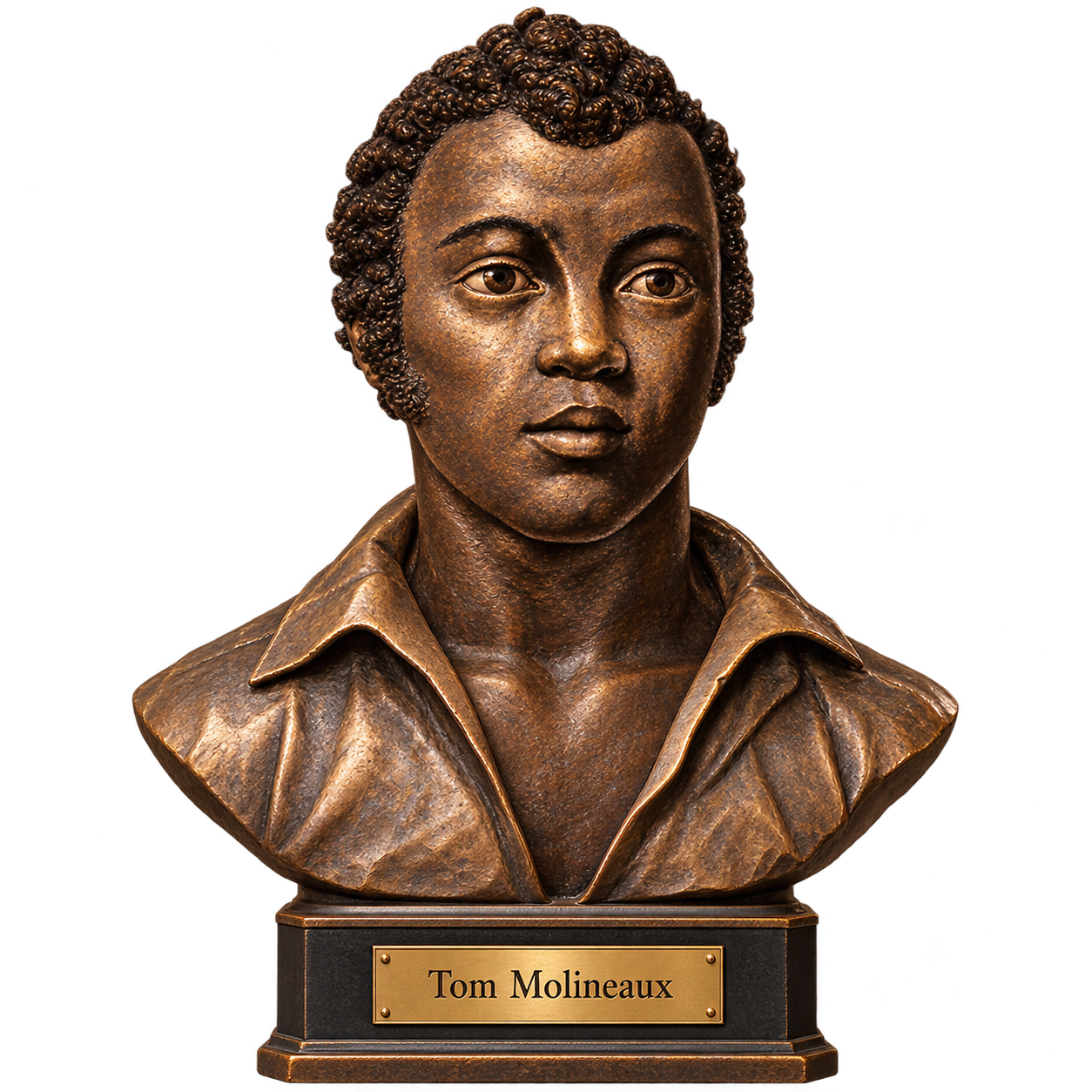
Inductee No. 005 | American Pioneer of the Prize Ring
Tom Molineaux carried Black American boxing talent onto an international stage at the beginning of the nineteenth century. Strong, dangerous and determined, he challenged England’s leading prizefighter, Tom Cribb, in two contests that made him famous far beyond the ring. His first challenge remains one of early boxing’s most disputed encounters.
Biography
Molineaux is generally believed to have been born around 1784 in Virginia. Traditional accounts describe him as an enslaved man who won his freedom by defeating another enslaved boxer. Surviving evidence about his American life is limited, leaving the circumstances of his birth, freedom and earliest fights uncertain.
He reached England around 1809 and trained with Bill Richmond, the accomplished Black American boxer. A succession of victories in the British prize ring established Molineaux as a challenger to Cribb.
Molineaux brought formidable strength and heavy punching to a sport that also permitted wrestling. Accounts of his first Cribb fight describe relentless pressure and damaging exchanges at close range. Pierce Egan praised both his courage and his knowledge of boxing, challenging the dismissive expectations surrounding the American.
Biggest Fight: Tom Cribb, December 18, 1810
Their first meeting took place at Copthorne, also called Copthall, Common near East Grinstead, in punishing winter weather. Molineaux repeatedly threatened the English champion and appeared capable of taking his title.
A contemporary report describes the American pressing forward, wearing Cribb down with punches and using close-range grappling. By the middle of the fight, the champion appeared exhausted. Molineaux’s performance turned a challenge many had dismissed into a serious threat to England’s leading prizefighter.
The result became entangled with allegations of unfair treatment. Accounts describe interference around the ring, while later retellings allege that Cribb’s corner gained recovery time by falsely accusing Molineaux of concealing bullets in his fists. Contemporary reporting and later histories differ, so the exact sequence should be treated cautiously. Cribb was declared the winner after Molineaux could no longer continue. Sources also disagree on the final round count.
His challenge exposed racial and national prejudice within the sporting public. In requesting another fight, Molineaux appealed for his color to have no bearing on his treatment. Egan later argued that “his colour alone prevented him from becoming the hero of that fight.”
The Rematch: September 28, 1811
At Thistleton Gap in Rutland, at least 15,000 spectators gathered for the second contest. Cribb had trained extensively with Captain Barclay. Molineaux again landed powerful punches, but the champion produced a decisive victory: the American suffered a broken jaw, and Cribb won in the eleventh round. The rematch ended in under twenty minutes.
Their contrasting encounters became the core of Molineaux’s sporting reputation: a disputed first defeat in which he seriously threatened the champion, followed by a clear loss in the return contest.
Other Notable Fights
Tom “Tough” Blake, August 21, 1810: Molineaux won in eight rounds. His performance helped establish him as a credible opponent for Cribb.
Jack Carter, 1813: A twenty-five-round victory added to his wins after the Cribb rivalry.
William Fuller, May 31, 1814: A victory recorded as a win by foul after two rounds. The contest lasted more than an hour, demonstrating the endurance demanded by bare-knuckle fighting.
Under the rules of the period, a round ended when a fighter went down rather than after a fixed three-minute interval. A two-round contest could therefore be a prolonged struggle.
Historical Record
Cyber Boxing Zone compilation: 6 wins, 3 losses and 1 no contest. This includes an impromptu win over Power and excludes exhibitions and wrestling. His American contests are poorly documented, and totals differ among compilations.
Other listed wins include Jack Burrowes on July 24, 1810, and Rimmer in twenty-one rounds on May 21, 1811.
Championship History
Molineaux twice challenged Cribb for the Championship of England, in 1810 and 1811, without receiving the title. The description “Champion of America” also appears in accounts, but a documented American championship reign has not been established.
Later Life
After his principal prizefighting career ended, Molineaux continued touring, giving sparring exhibitions and teaching boxing in Britain and Ireland. His fame did not provide lasting financial security.
In failing health and poverty, he found shelter with members of the 77th Regiment in Galway. He died there on August 4, 1818, at approximately 34, and was buried in St James’s Cemetery, Mervue. The exact cause of his death is uncertain.
Legacy and Influence
A pioneer of Black American boxing. Alongside his trainer Bill Richmond, Molineaux helped establish Black American fighters as prominent figures in the British prize ring. His appeal for fair treatment after the first Cribb fight also preserves his own response to the prejudice surrounding his challenge.
An early international sporting celebrity. His American identity became central to matches that carried English national pride as well as personal reputation. The crowds and attention surrounding the rivalry show how prizefighting could become an international spectacle.
A figure in popular culture. Molineaux appeared in printed portraits and Staffordshire ceramic figures. Examples survive in the National Portrait Gallery, including a figure made around 1810–1815 and an etching published in 1812. These objects preserve the public recognition he achieved beyond his fight results.
Lasting recognition. He entered the International Boxing Hall of Fame’s Pioneer category in 1997. In December 2019, Katie Taylor unveiled a memorial headstone in Galway, giving his resting place recognition more than two centuries after his death.
Why S³ Honors Tom Molineaux
S³ honors Molineaux for his ability, courage and place in the foundations of Black American boxing. His challenge to Cribb made an international audience confront a Black fighter’s claim to the sport’s highest recognition. His life belongs in the Hall alongside the champions whose history he helped make possible.