
S³ Hall Of The Sweet Scientist
Sam Langford
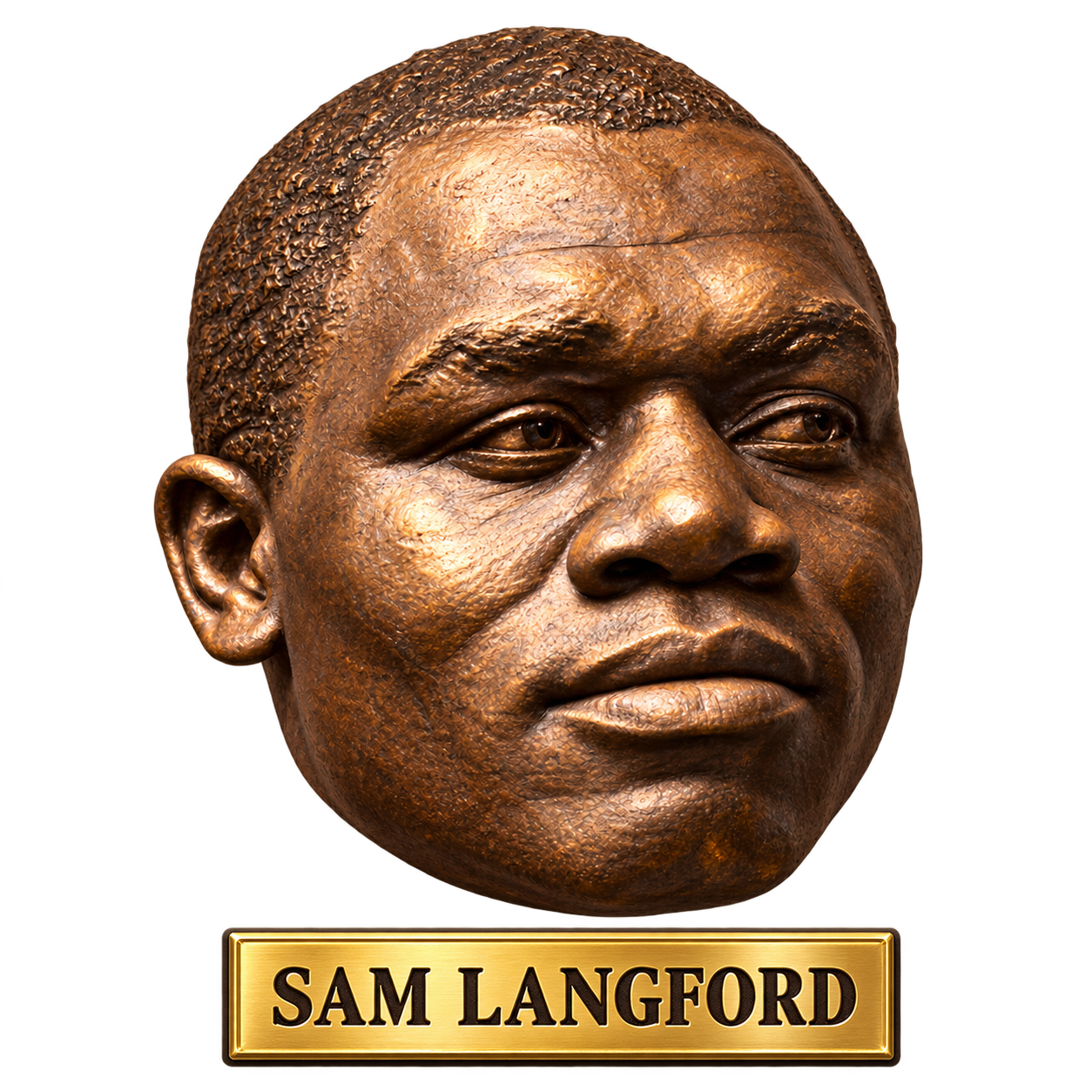
Inductee No. 007 | The Boston Terror
Sam Langford combined exceptional punching power with the skill to compete from lightweight through heavyweight. He defeated outstanding fighters across those divisions, yet never held a universally recognized world championship. His career remains central to any account of boxing greatness and the opportunities denied to Black fighters.
Biography
Samuel Edgar Langford was born in Weymouth Falls, Nova Scotia, and established his boxing career in Boston. His birthday is generally given as March 4, but his exact birth year is uncertain: historical sources place it between 1883 and 1886.
He began boxing professionally in 1902 and continued into the mid-1920s. His work at Boston’s Lenox Athletic Club brought him into an environment where he could develop his ability. Fellow Nova Scotian boxer George Byers became an important teacher, helping Langford sharpen the left hook that became part of his formidable offense.
Short by heavyweight standards, Langford relied on more than strength. His footwork and trained left hand helped him create openings against larger opponents, while power in both hands made those openings dangerous. He progressed through lightweight, welterweight, middleweight and light heavyweight competition before becoming a leading heavyweight.
Biggest Fight: Jack Johnson, April 26, 1906
Langford’s only meeting with Jack Johnson took place in Chelsea, Massachusetts, before Johnson won the world heavyweight championship. Johnson was defending the separate World Colored Heavyweight Championship.
The recorded weights illustrate the challenge: 156 pounds for Langford against 185 for Johnson. Johnson won a clear fifteen-round decision. Later stories exaggerated Langford’s success in the contest; the surviving accounts do not support presenting the result as a disputed defeat.
Langford subsequently grew into a more experienced heavyweight contender. After Johnson became world champion in 1908, however, Langford never received a rematch for that championship. Their rivalry became defined by both the fight that happened and the title opportunity that did not.
Signature Victory: Joe Gans, December 8, 1903
At Boston’s Criterion Athletic Club, Langford defeated reigning world lightweight champion Joe Gans over fifteen rounds. Contemporary reporting praised his aggressive, skillful boxing and effective left hand.
The lightweight championship was not at stake: the fighters had agreed to a contest above championship weight, and Langford also exceeded their contracted limit. He therefore earned a major victory over the champion without acquiring his title.
The performance established Langford as a serious talent early in his professional career. It also provided a lasting example of his ability to compete successfully against an accomplished technician.
Other Notable Fights
Joe Walcott, September 5, 1904: Langford fought the celebrated welterweight champion to a fifteen-round draw. Reports describe a hard contest in which Langford’s boxing and counterpunching were tested by Walcott’s pressure. Sources differ on whether the championship was at stake; neither account makes Langford the title winner.
Stanley Ketchel, 1910: A six-round no-decision against the reigning middleweight champion. Ketchel’s title was not at stake.
Philadelphia Jack O’Brien, 1911: Langford stopped the former light heavyweight champion in the fifth round, adding another distinguished name to his record.
Sam McVey, April 8, 1912: Langford won a twenty-round decision in Sydney, regaining the World Colored Heavyweight Championship. McVey was a recurring rival throughout his heavyweight career.
Harry Wills, November 26, 1914: Langford knocked Wills out in the fourteenth round. They met eighteen times, and Wills generally had the better of their long series, but Langford’s knockout victories remain major achievements.
Tiger Flowers, 1922: Despite deteriorating eyesight, Langford stopped the future world middleweight champion in the second round, demonstrating that his punching remained dangerous late in his career.
Historical Record
International Boxing Hall of Fame compilation: 167 wins, 38 losses and 37 draws, with 117 knockouts, plus 48 no-decisions and 3 no-contests. That compilation lists 293 bouts.
Historical totals vary substantially. Some compilations assign newspaper verdicts to no-decision contests or include different documented bouts. A newspaper verdict should be distinguished from an official ringside decision; the figures above retain the Hall of Fame’s categories.
Championship History
Langford held the World Colored Heavyweight Championship in multiple reigns. This was a championship contested by Black heavyweights who were frequently excluded from opportunities to challenge for the world heavyweight title. Its history includes competing claims and disputed successions.
His victories over McVey in 1912, Wills in 1914 and 1916, and Joe Jeannette in 1916 form part of that championship history.
He never held the universally recognized world heavyweight championship. Racism restricted his opportunities against white champions, while Johnson also declined to defend the world title against him.
Later Life
Eye injuries increasingly affected Langford’s final years in the ring. He continued fighting with severely impaired vision and eventually became blind.
In 1944, journalist Al Laney found him living in poverty in New York. Public attention and a support fund improved his circumstances. Langford died on January 12, 1956, in Cambridge, Massachusetts.
Legacy and Influence
Greatness across weight divisions. His success from lightweight through heavyweight makes him an important figure in boxing’s pound-for-pound history. His opposition included Gans, Walcott, Johnson, Ketchel, O’Brien, McVey, Jeannette and Wills.
Power supported by technique. Langford’s footwork and trained left hand helped him overcome physical disadvantages. His career belongs in discussions of boxing skill as well as punching power.
A record shaped by exclusion. Langford, McVey, Jeannette and Wills repeatedly fought one another while access to the principal heavyweight championship remained restricted. Their repeated meetings reflect both the quality of that competition and the limits imposed on their careers.
Lasting recognition. Langford entered the International Boxing Hall of Fame in 1990. Canada designated him a National Historic Person in 1987, recognizing his contribution to the country’s sporting history.
Why S³ Honors Sam Langford
S³ honors Langford for the quality of his opposition, his skill across weight divisions and the intelligence behind his punching power. His career demonstrates why a fighter’s greatness must be judged through performance and competition as well as championships.
His place in the Hall recognizes both the boxing he delivered and the opportunities his era denied him.