
S³ Hall Of The Sweet Scientist
Charley Burley
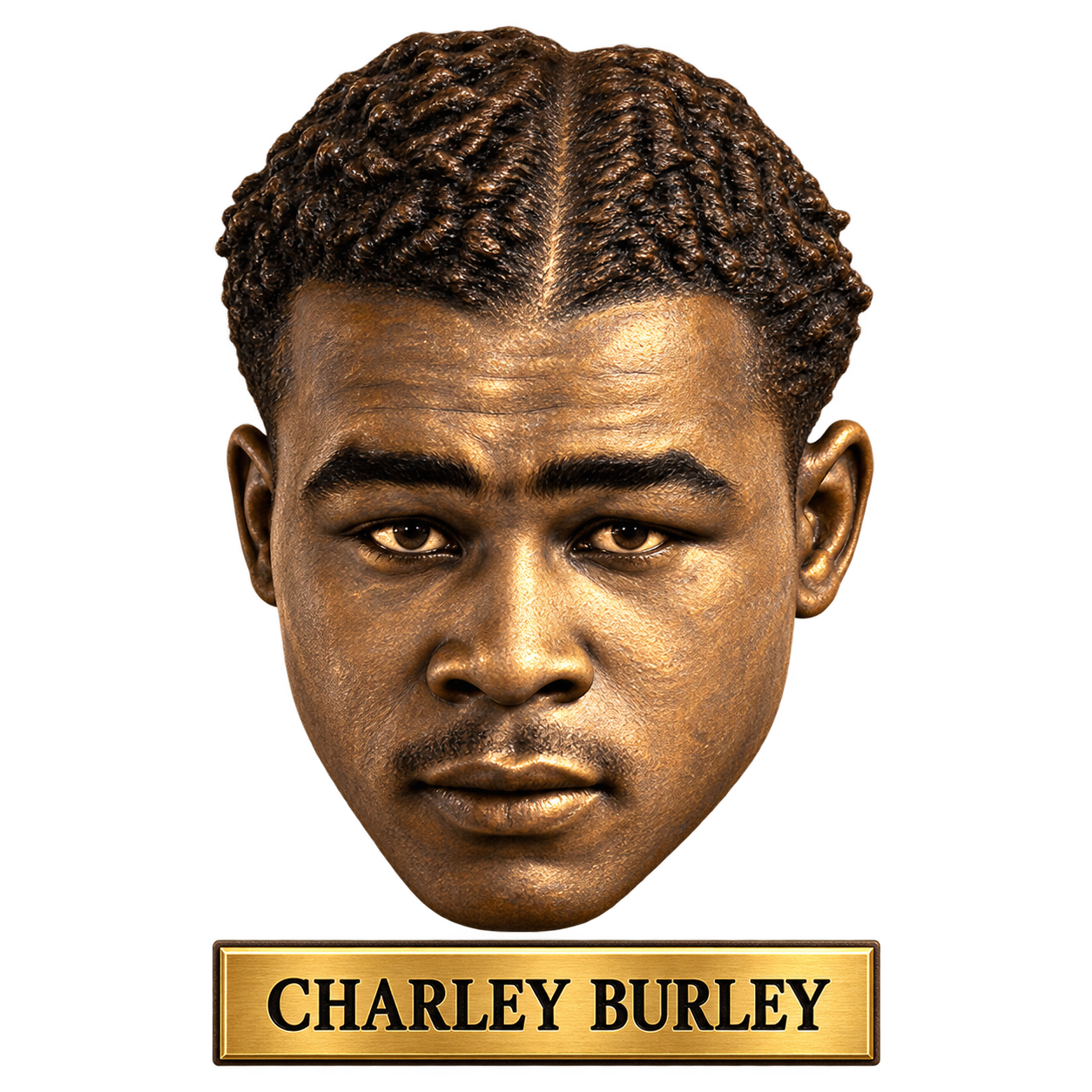
Inductee No. 008 | Master of the Sweet Science
Charley Burley combined elusive defense with punishing counterpunches. He defeated future world champions Fritzie Zivic, Billy Soose and Archie Moore, yet never received a world championship fight. His career stands among boxing’s clearest examples of exceptional ability without the opportunity to win its highest recognition.
Biography
Charles Duane Burley was born on September 6, 1917, in Bessemer, Pennsylvania, and became closely associated with Pittsburgh. He began boxing at twelve through the city’s Kay Boys Club and developed into a successful amateur before turning professional in 1936.
His convictions also shaped his amateur career. In 1936, Burley declined an invitation to the United States Olympic boxing trials because he opposed racial and religious persecution in Nazi Germany. He accepted an invitation to the alternative Workers’ Games in Barcelona, but the Spanish Civil War prevented those games from taking place.
Burley competed principally at welterweight and middleweight. His defensive movement created opportunities to counter, and his punching power made those counters consequential. Boxing researcher Bobby Franklin’s study of surviving footage highlights his ability to slip and roll punches before answering with accurate shots.
Trainer Eddie Futch considered Burley the finest all-around fighter he had seen. That assessment reflects the high regard in which boxing professionals held his complete skill set.
Biggest Fight: Archie Moore, April 21, 1944
At Legion Stadium in Hollywood, California, Burley faced future world light heavyweight champion Archie Moore. The recorded weights were 155 pounds for Burley and 161 for Moore.
Burley won a decisive ten-round decision, repeatedly knocking Moore down. United Press reported that he won nine of the ten rounds. Contemporary accounts differ on whether Moore went down three or four times, but agree on the commanding nature of Burley’s performance.
The victory became a defining achievement because of the quality of the opponent and the skill Burley demonstrated. Moore later described Burley’s deceptive movement, balance and ability to punch effectively from unusual positions.
Championship-Winning Fight: Cocoa Kid, August 22, 1938
Burley defeated Cocoa Kid, Herbert Lewis Hardwick, over fifteen rounds at Hickey Park in Pennsylvania to win the World Colored Welterweight Championship.
He dropped the experienced Cocoa Kid early and threatened him again in the final round. The victory established Burley against another outstanding Black contender and added a championship to his record.
This was a segregated championship rather than the universally recognized world welterweight title. Henry Armstrong held that principal championship at the time.
Other Notable Fights
Fritzie Zivic, 1938–1939: Burley won two of their three professional meetings, including ten-round decisions on June 13, 1938, and July 17, 1939. Zivic later became world welterweight champion.
Billy Soose, 1938: Burley won a clear ten-round decision over the future middleweight champion. Contemporary reporting praised his boxing and punching against the larger opponent.
Holman Williams, August 14, 1942: Burley stopped Williams in the ninth round in New Orleans. They met seven times overall, with three victories apiece and one no-contest, making Williams one of his most important rivals.
Ezzard Charles, May 25 and June 29, 1942: Burley lost ten-round decisions in both meetings with the future heavyweight champion. Charles tested him severely, and both defeats belong in an assessment of Burley’s demanding opposition.
Jack Chase, April 6, 1944: Burley won by ninth-round knockout, capturing the California State Middleweight Championship fifteen days before his victory over Moore.
Historical Record
BoxRec compilation: 83 wins, 12 losses and 2 draws, with 50 knockouts, plus 1 no-contest — 98 professional bouts. His professional career ran from 1936 to 1950.
The International Boxing Hall of Fame lists 84 wins, 11 losses, 2 draws and 1 no-contest. This profile uses BoxRec’s bout-by-bout total and identifies the difference rather than combining the two records.
Burley was never stopped in his professional career.
Championship History
World Colored Welterweight Championship: Won against Cocoa Kid in 1938.
World Colored Middleweight Championship: Won against Holman Williams in August 1942; Williams took the title in their October rematch.
California State Middleweight Championship: Won against Jack Chase in April 1944.
Despite years as a ranked contender at welterweight and middleweight, Burley never fought for the principal world championship in either division. His segregated and state titles should be distinguished from those world championships.
Later Life
After boxing, Burley worked as a sanitation worker in Pittsburgh. His influence extended beyond the ring: playwright August Wilson remembered him as an important male role model from his childhood.
Burley entered the International Boxing Hall of Fame in 1992. He died on October 16, 1992, at 75, and was buried in Pittsburgh’s Allegheny Cemetery.
Legacy and Influence
A complete technician. Burley’s reputation rests on how his defensive movement, balance and counterpunching worked together. Surviving footage of his 1946 meeting with Oakland Billy Smith provides an opportunity to study those qualities directly.
A central figure in the Black Murderers’ Row. Burley belonged to a group of talented, frequently avoided Black fighters whose members included Holman Williams, Cocoa Kid, Eddie Booker and Jack Chase. Limited opportunities forced many of them to fight one another repeatedly.
A career shaped by matchmaking and commercial power. Historians identify his modest drawing power and the unfavorable risk of facing him among the obstacles to a championship opportunity. His record shows why boxing achievement cannot be understood solely through title belts.
Respect from the sport’s masters. Futch’s assessment and Moore’s recollections preserve the regard Burley earned from people who understood elite boxing at close range.
Why S³ Honors Charley Burley
S³ honors Burley for his command of boxing fundamentals, dangerous counterpunching and willingness to face outstanding opposition. His victory over Moore and his demanding rivalries give substance to the praise he received.
His place in the Hall recognizes a fighter whose ability deserved the world championship opportunity he never received.