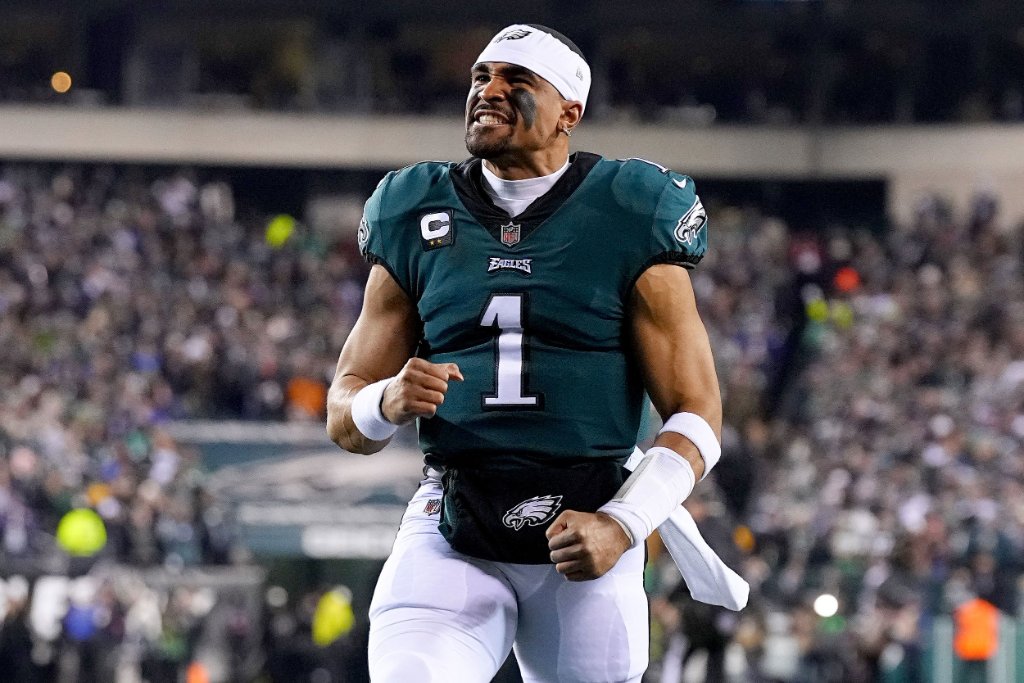

The Philadelphia Eagles didn't look like their 2024 championship version. That's not an opinion - that's film.
The offense stalled. Execution dipped. There were stretches where the rhythm was completely absent. Criticism of Jalen Hurts - whether it's missed reads, a reluctance against zone coverage, or a poorly timed audible into four verticals - is fair game.
That's football. Quarterbacks get critiqued. It comes with the territory.
What isn't normal is how those critiques are being handled.
Critique Is Necessary. Leaks Are Not.
Every quarterback has weaknesses. Every offense has friction points. The film room exposes everything anyway - opposing defenses already study tendencies, preferred reads, and audible habits before kickoff.
None of that is the problem.
The problem is the message coming out of the building.
Reports that Hurts is "un-coachable," that the offense grew stale because of him, and that "the team knows this" don't read like honest analysis. They read like internal frustration being laundered through insiders.
There's a fundamental difference between coaching and exposing.
You fix flaws in the film room. You don't broadcast them through reporters.
From Film Room to Finger-Pointing
The failed audible into four verticals isn't the story.
Quarterbacks check into bad plays every week across the league. It won't be the last time it happens in Philadelphia. That's part of the position - you make decisions in real time, and sometimes they're wrong.
The real story is that everyone now knows it.
Tape tells opponents what you do. Leaks tell them what you believe.
When a team allows that kind of internal information to circulate publicly, it's no longer a conversation about scheme or execution. It becomes accountability shifting outward - away from the locker room and onto one man.
A Signal the Locker Room Can Feel
This goes beyond play design.
When reports surface that players feel the offense was stale because of the quarterback, that's not strategy. That's belief. And belief controls execution.
If a locker room begins quietly questioning its quarterback, timing slows. Trust deteriorates. The offense becomes hesitant before the snap even happens. That's not a scheme problem - that's a culture problem.
Championship teams don't eliminate conflict. They contain it.
Hurts' Résumé Matters
This isn't a young quarterback still trying to earn his place.
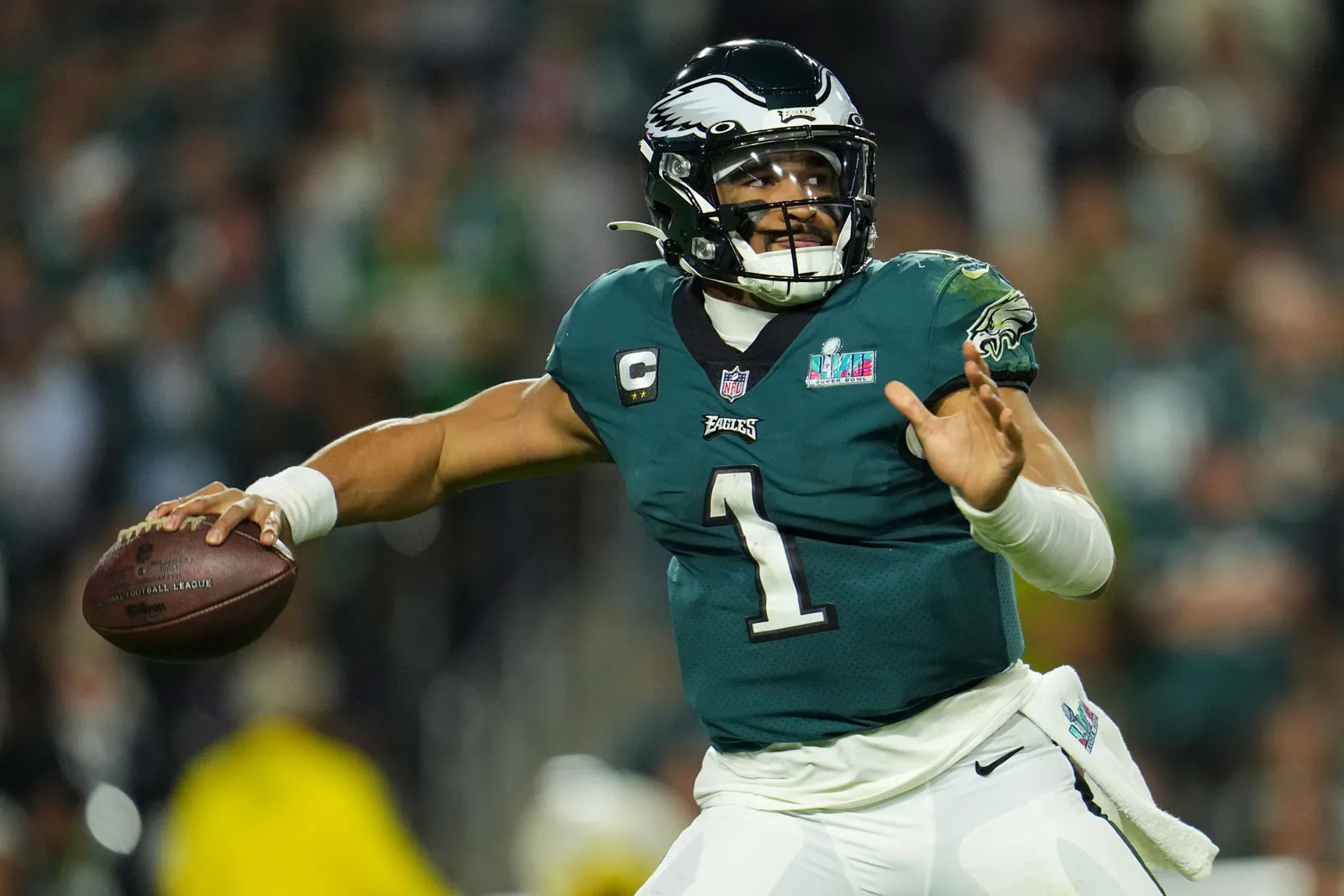
Jalen Hurts has five straight playoff appearances, three division titles, two Super Bowl appearances, one Super Bowl ring, and an 11-6 record this past season. He has done what very few quarterbacks in this league have done - and he's still ascending.
That résumé matters.
It means he's earned the right to be coached hard, critiqued honestly, and pushed to be better. But it also means he hasn't earned to be publicly undermined by his own organization.
He's earned correction. Not exposure.
Leadership Under Pressure
While the noise builds around him, Hurts hasn't flinched.
He's taken accountability. He hasn't pointed at coaches. He hasn't thrown teammates under the bus. He hasn't pushed back publicly or played the victim.
He's absorbing it - all of it.
That's what franchise quarterbacks do. His reputation is taking the hit so the locker room doesn't have to. That's not weakness. That's leadership.
The real question isn't whether Hurts is stepping up to the moment. He clearly is.
The question is whether the organization is meeting him there.
Adversity Exposes Identity
Great teams don't reveal themselves when things are working. They reveal themselves when something isn't.
Anybody can look unified when the offense is rolling and the wins are easy. What matters is what happens when the wheels come off - when the play-calling is questioned, when the quarterback struggles, when the losses are painful and the offseason is long.
Right now, the Eagles don't look like a team pulling together. They look like a team letting frustration seep out through the cracks.
You don't go to war with someone and then send reports about their weaknesses to the other side.
A Contender at a Crossroads
The talent in Philadelphia isn't the issue. This is still a Super Bowl-caliber roster - arguably one of the most complete in the NFC.
But talent alone doesn't decide championships. Alignment does.
After falling short of repeating, the 2026 season should be approached with urgency, clarity, and collective confidence. The hunger should be undeniable.
Instead, the tone coming out of South Philly feels like doubt.
And that's where things get genuinely dangerous - because chemistry in the NFL doesn't erode slowly. It collapses fast.
The Bottom Line
Conflict lives in every locker room. Disagreements happen. Frustration happens. That's professional sports.
The difference is always in how it's handled.
If the Eagles' front office and coaching staff genuinely believe issues exist with their quarterback, that's an internal conversation. Handle it in the building. That's coaching. That's leadership.
But the moment it becomes public, it becomes something else entirely.
It becomes a signal - to the locker room, to the league, and to Hurts himself.
And if you're serious about building a championship team, that signal matters more than any single audible.
Jalen Hurts is taking accountability, protecting his teammates, and carrying the weight that comes with the position.
Now it's on the organization to do the same.
Because the gap between a contender and a collapse isn't talent. It's how you handle adversity when no one is watching - and right now, everyone in Philadelphia is watching very closely.