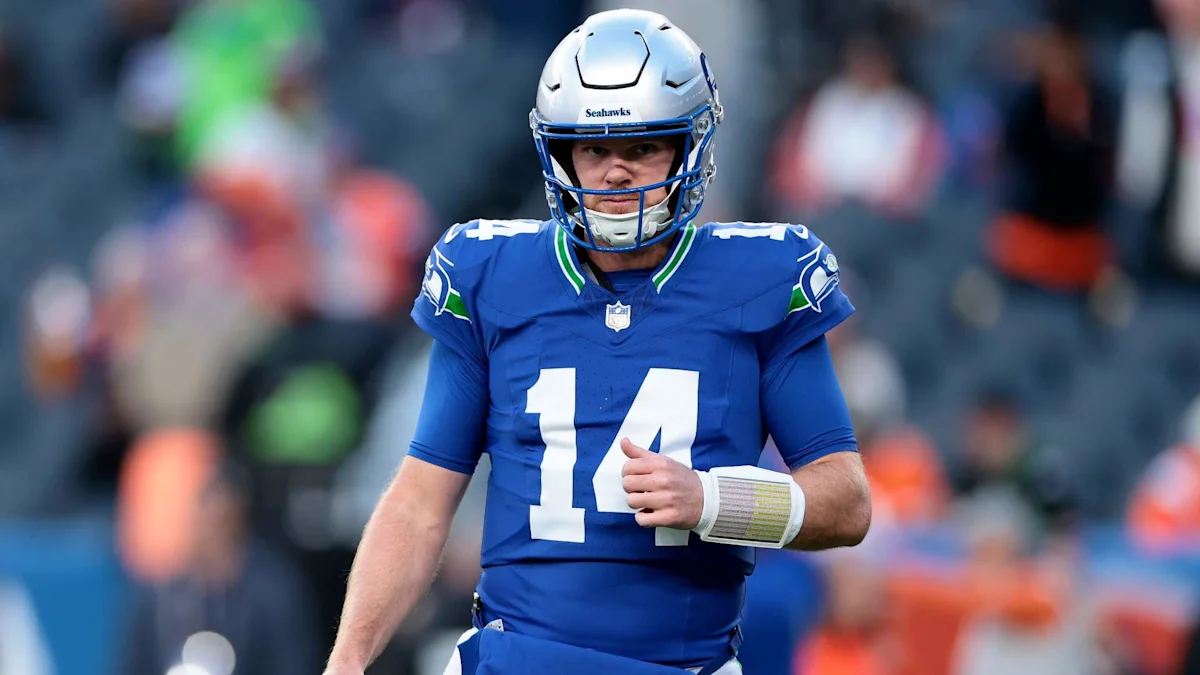
By Sweet Science Sports
One of the hardest things to talk about in the NFL is Sam Darnold's career. Do quarterbacks fail because they aren't good enough, or because they are put in situations where they can't get better? People called Darnold a warning story for years. He was a highly drafted quarterback who didn't live up to expectations. Now, he's getting ready for the Super Bowl.
The league has to face an uncomfortable truth because of Darnold's story: quarterback development doesn't happen in a straight line. It is weak. It all depends on coaching, structure, patience, and timing. When those things are missing, even good players can look broken. It's not a fluke that he's back in Seattle. It's a case study that makes you think about how the NFL defines failure.
Early Promise and Immediate Pressure in New York
Sam Darnold was very young when he joined the NFL and is still learning how to be a quarterback. After only two years at USC, the New York Jets picked him third overall. The pick seemed to be more about the organization's needs than its power. The Jets needed a quarterback, and Darnold gave them hope in a draft class where teams were looking at both potential and past performance.
Darnold didn't have any insulation when he came in. Unlike Mark Sanchez, who had a great defense and a conservative offense under Rex Ryan, Darnold didn't get either of those things. He started right away behind a roster that didn't have any top-tier players. He had to beat NFL defenses without time to learn. The system didn't slow the game down for him - it made it go faster.
The results were what everyone expected: mistakes, pressure, and turnovers. They told Darnold to lead before they let him learn. Years later, Adam Gase admitted openly that the team didn't do a good job of helping Darnold grow. This quarterback didn't forget how to play. He just never had time to get better.
The 2018 Quarterback Class: Different Ways to Go
The 2018 quarterback class has been both tested and clarified over time. The first pick was Baker Mayfield. Darnold was the third. Josh Allen was the seventh. Lamar Jackson fell to the end of the first round. Josh Allen became one of the strongest quarterbacks in the league. Lamar Jackson won the MVP award. Baker Mayfield got his career back on track. Josh Rosen left the league quickly.
Darnold's path was quieter, but it taught him just as much. People said he couldn't lead a team early in his career. That label stayed on longer than it should have. His play in the NFC Championship changed that view. He was calm under pressure, made quick decisions, and was in complete control of the offense. This wasn't a quarterback trying to avoid the moment. It was a quarterback who was in charge.
The Wrong Hypothetical
A question many people still ask: Would it have been better for the Jets to pick Josh Allen or Lamar Jackson? It's tempting because both quarterbacks are very athletic and can handle chaotic situations. But that question doesn't take into account a bigger truth - the Jets weren't bad at finding quarterbacks. They were a failing organization.
No matter how talented you are, organizational instability, coaching turnover, inconsistent rosters, and pressure without patience lead to bad results. Even the best physical tools wear out in systems that don't work. It wasn't about who the Jets picked in the draft. It was what they built around him.
Lessons on Structure: San Francisco and Minnesota
Darnold's career became a learning experience after he left New York. He saw real offensive structure in San Francisco - timing, reading layers, and system design that requires patience. That time helped him rebuild his base. Minnesota gave him a chance, but not a long-term commitment. There were signs of progress, but the organization quickly changed course. Looking back, it felt rushed.
Seattle: When Everything Finally Came Together
Seattle didn't just get Sam Darnold. They let him go. The game got slower. Reads were defined. Protection schemes aligned with offensive identity. The system didn't tell him to be careless - it told him to be exact.
Darnold's response was to play the best football of his life. Good execution on third down. Decision-making in the red zone with control. Commanding the offense without panic. Traits that were once thought to be reckless became refined.
It wasn't confidence that made the difference. It was clarity. His teammates trusted him. Coaches gave him authority. The system supported him. That's how real quarterback development works.
What the NFL Should Take Away from Sam Darnold
Sam Darnold's rise from criticized draft pick to Super Bowl contender isn't a story of dramatic redemption. It's about fixing things. Fixing the environment. Fixing patience. Fixing the evaluation.
His early problems showed how dangerous it is to make young quarterbacks lead without support. His comeback shows that talent doesn't go away - it just waits. The same conclusion comes up over and over again in coaching admissions, franchise decisions, and performance progression: the success of a quarterback depends on their surroundings.
Darnold's story isn't a miracle. It's a lesson the NFL keeps having to relearn.
Sweet Science Sports - Where Intelligence Meets Impact