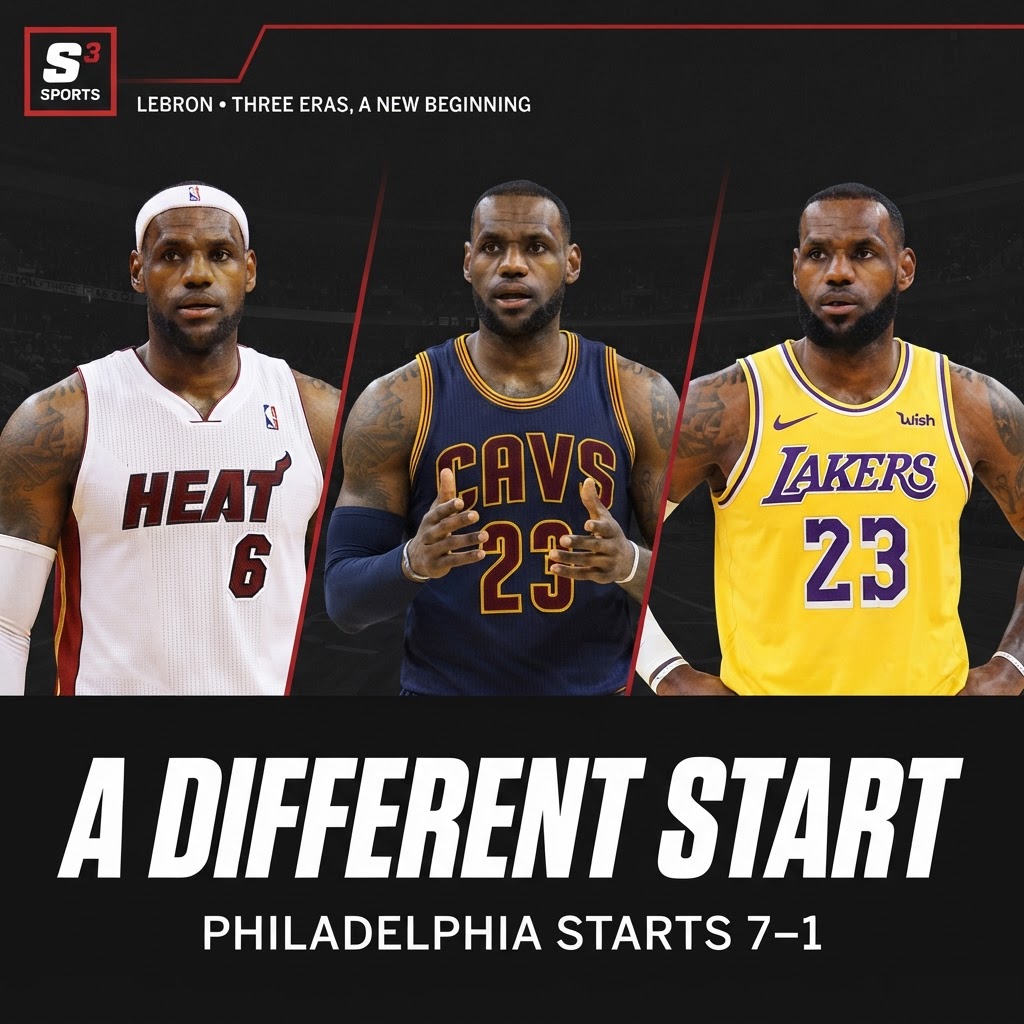
When LeBron James arrived in Los Angeles in the summer of 2018, the expectation - the stated expectation, barely disguised - was dynasty. Championships, plural. Legacy-cementing runs. A Hollywood ending written in gold.
What followed over the next eight seasons was something more complicated, more human, and ultimately more interesting than any dynasty script could have produced.
The LeBron Lakers era is over. Let's take an honest look at what it actually was.
The Year-by-Year Record
The scoreboard doesn't lie, and the Lakers' regular-season ledger with LeBron tells a story of wild variance - from catastrophic to dominant, with everything in between.
| Season | Record | Result | LeBron PPG |
|---|---|---|---|
| 2018-19 | 37-45 | Missed Playoffs | 27.4 |
| 2019-20 | 52-19 | 🏆 NBA Champions | 25.3 |
| 2020-21 | 42-30 | 1st-Round Exit | 25.0 |
| 2021-22 | 33-49 | Missed Playoffs | 30.3 |
| 2022-23 | 43-39 | Western Conf. Finals | 28.9 |
| 2023-24 | 47-35 | 1st-Round Exit | 25.7 |
| 2024-25 | Playoff Team | 1st-Round Exit | 24.4 |
| 2025-26 | 39-21* | Eliminated by OKC | 20.9 |
*39-21 in games LeBron appeared in during the 2025-26 regular season.
The Championship That Defined Everything
There is one number that anchors the entire conversation: 2020.
In the NBA Bubble at Walt Disney World, with the world locked down and basketball played in empty arenas in front of no fans, LeBron James led the Los Angeles Lakers to the franchise's 17th championship - and his fourth. He averaged 29.8 points, 11.8 rebounds and 8.5 assists in the Finals against Miami. He won Finals MVP. He became the first player in NBA history to win Finals MVP with three different franchises.
It was LeBron at 35 years old, doing what 35-year-olds are not supposed to do. It was remarkable. It was undeniable. And for the Lakers organization, starved of a title since 2010, it was everything.
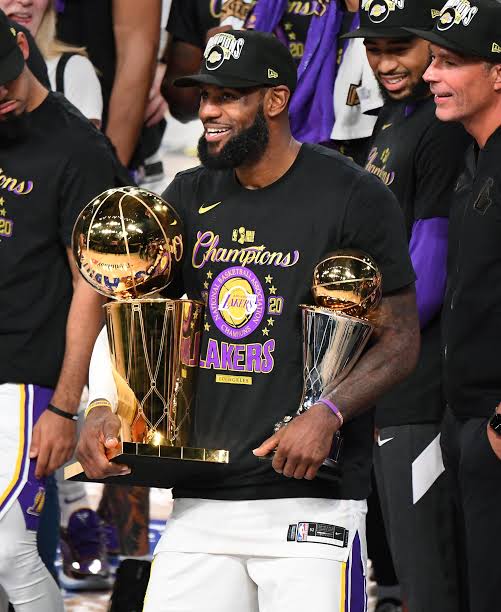
No matter what else happened in the eight seasons of the LeBron era - and a lot happened - the 2020 championship is the pillar the entire structure rests on. You cannot evaluate this era without it. You cannot dismiss the rest of it because of it. Both things have to be true at once.
The Highs, the Lows, and the Reality Between
Beyond 2020, the Lakers' playoff record with LeBron sits at approximately 32-31 - a reflection of a team that was often good enough to compete but rarely good enough to go all the way.
The 2022-23 Western Conference Finals appearance was the other undeniable highlight - LeBron dragging a 43-win team further than anyone had a right to expect, averaging 26.9 points against a Nuggets team that was clearly the superior squad. He carried that team on his back, and the basketball world noticed.
But the misses were real, too. Three missed playoffs across the era, not three consecutive seasons. A franchise that spent much of eight years searching for the right supporting cast, the right coach, and the right roster construction - and never quite finding it consistently enough.
The Statistical Arc
What LeBron did individually over this stretch - at the ages he did it - belongs in a separate category from the team results.
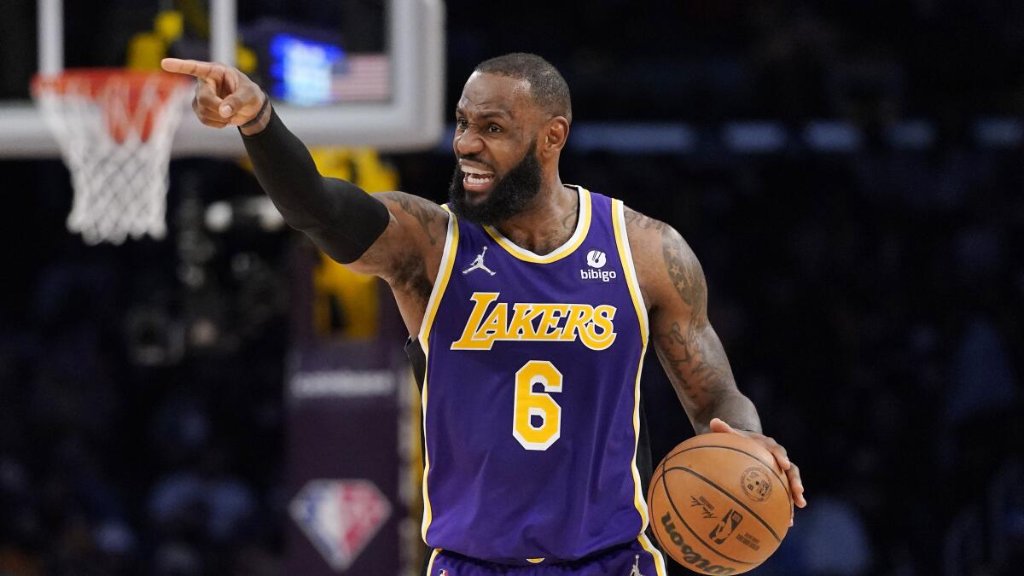
Consider: in 2021-22, on a 33-win Lakers team that missed the playoffs, LeBron James averaged 30.3 points per game. He was 37 years old. He led the entire NBA in scoring. There is no logical framework in which that makes sense, and yet there it is.
His 2025-26 line - 20.9 PPG, 6.1 RPG, 7.2 APG, 51.5% FG - belongs in the conversation for one of the most impressive statistical seasons ever produced by a player his age. The efficiency held. The playmaking held. The scoring dipped, but the shot quality did not.
What declined, gradually and inevitably, was the ability to carry a team through a playoff run the way he once could. That's not a knock. That's physics.
How It Ends
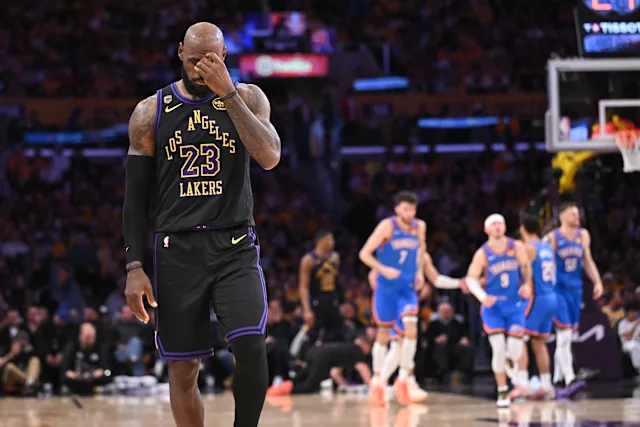
The Oklahoma City Thunder eliminated the Lakers in the first round this spring. OKC is younger, faster, deeper, and built for the next decade. Los Angeles, with LeBron at 41, was outmatched in nearly every phase that modern basketball values.
And yet - in Game 4, when the series was already decided, LeBron James put up 24 points and 12 rebounds and gave the Thunder everything they could handle for four quarters. He didn't concede. He didn't conserve. He competed.
That's the through-line of every single season in this era. Whether it was a championship bubble or a lottery miss, LeBron James showed up and competed. You can argue about roster construction, front office decisions, coaching continuity, injury luck and a dozen other variables that shaped these eight years. You cannot argue about the effort.
The Final Verdict
Eight seasons. One championship. One conference finals. Three missed playoffs. An aging superstar who remained statistically productive long past the point where anyone expected it, on a franchise that never quite built the right structure around him.
Was the LeBron Lakers era a success? That depends entirely on your baseline.
If the baseline is the championship expectations of 2018 - dynasty, plural rings, Hollywood ending - then no, it fell short. If the baseline is what a franchise without direction looked like before he arrived, and what a 2020 championship meant to Laker fans who had been waiting a decade, then yes, it delivered something real and lasting.
Both readings are valid. That's what makes it complicated. That's what makes it interesting.
LeBron James played 8 seasons in purple and gold. He left with one more ring than he arrived with, a points scoring record that may never be touched, and a run in Hollywood that was everything NBA basketball is supposed to be - messy, brilliant, maddening and occasionally transcendent.
The LeBron Lakers era is over.
It was worth watching every minute of it.